Saltbox is a co-warehousing solution in the U.S. with over 11 locations that targets SME ecommerce brands looking to scale.
They were one of those solutions that, if people knew, they’d choose 10/10 times for their value-for-money.
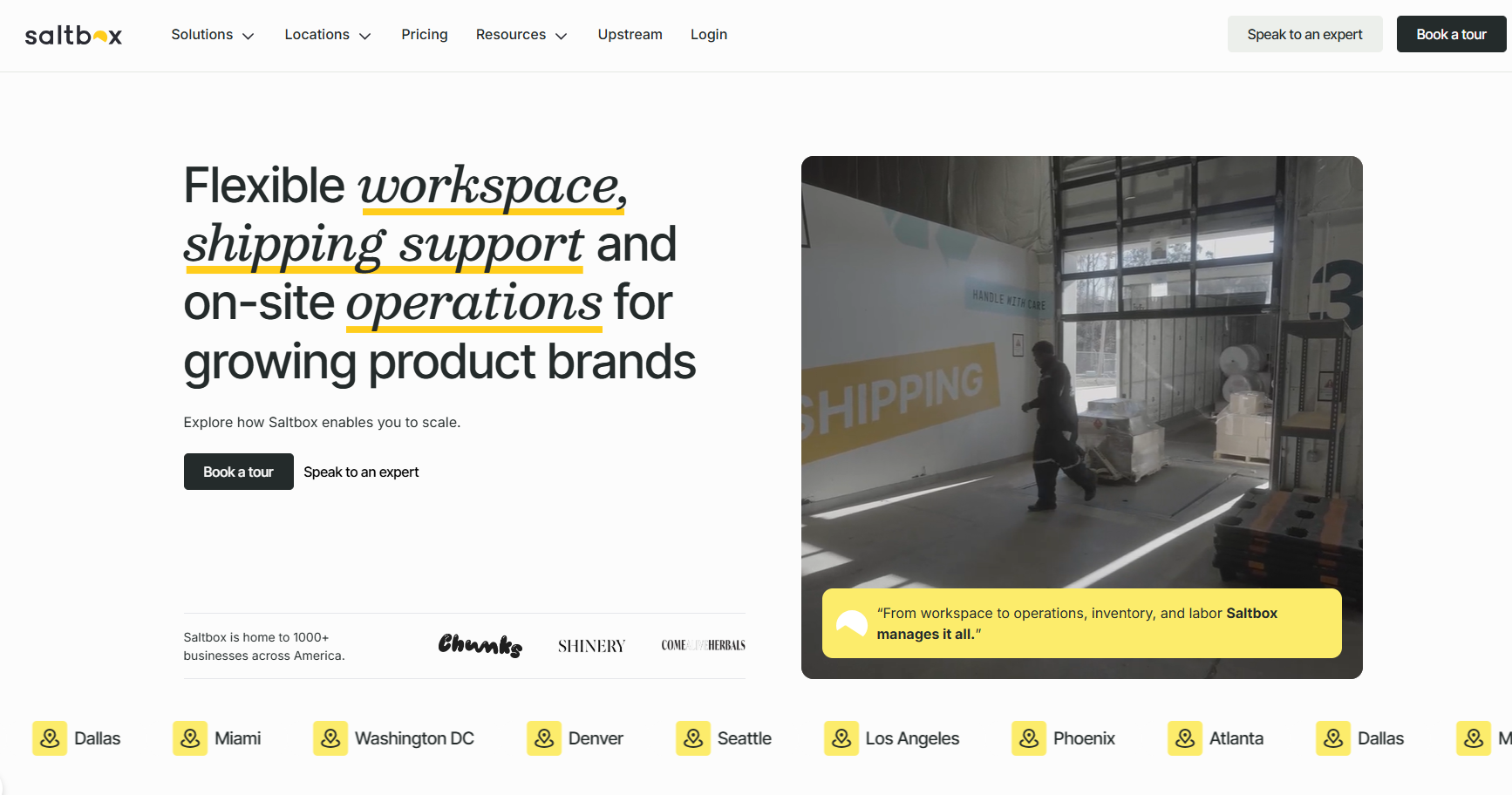
Saltbox is competing with known names in the market, such as ReadySpaces and WorkSpace, but also against the concept of co-warehousing, as many e-commerce businesses prefer the 3PL model, which gives them freedom despite the price tag and limited flexibility.
In this case study, I’ll walk you through how we managed to build and execute a bottom-of-the-funnel content strategy for Saltbox that helped them control the narrative across Google and AI search on what the best warehousing solutions are for their different locations.
Before House of Growth, Saltbox already had a content strategy that consisted of top-of-the-funnel content, whose purpose was to help their ICP with their ecommerce journey (e.g., what email marketing platforms to use).
They also had established a name in the industry, with thousands of branded searches a month.
However, this was also one of their problems in SEO: they relied too much on branded search (i.e., people specifically looking for Saltbox), and were essentially gaining 95%+ of their traffic from branded queries.
Saltbox needed to find a way to generate leads from inbound, instead of relying on word of mouth, social media, and paid acquisition channels.
We started by writing competitor alternatives guides, where we positioned Saltbox as the best alternative to a competitor.
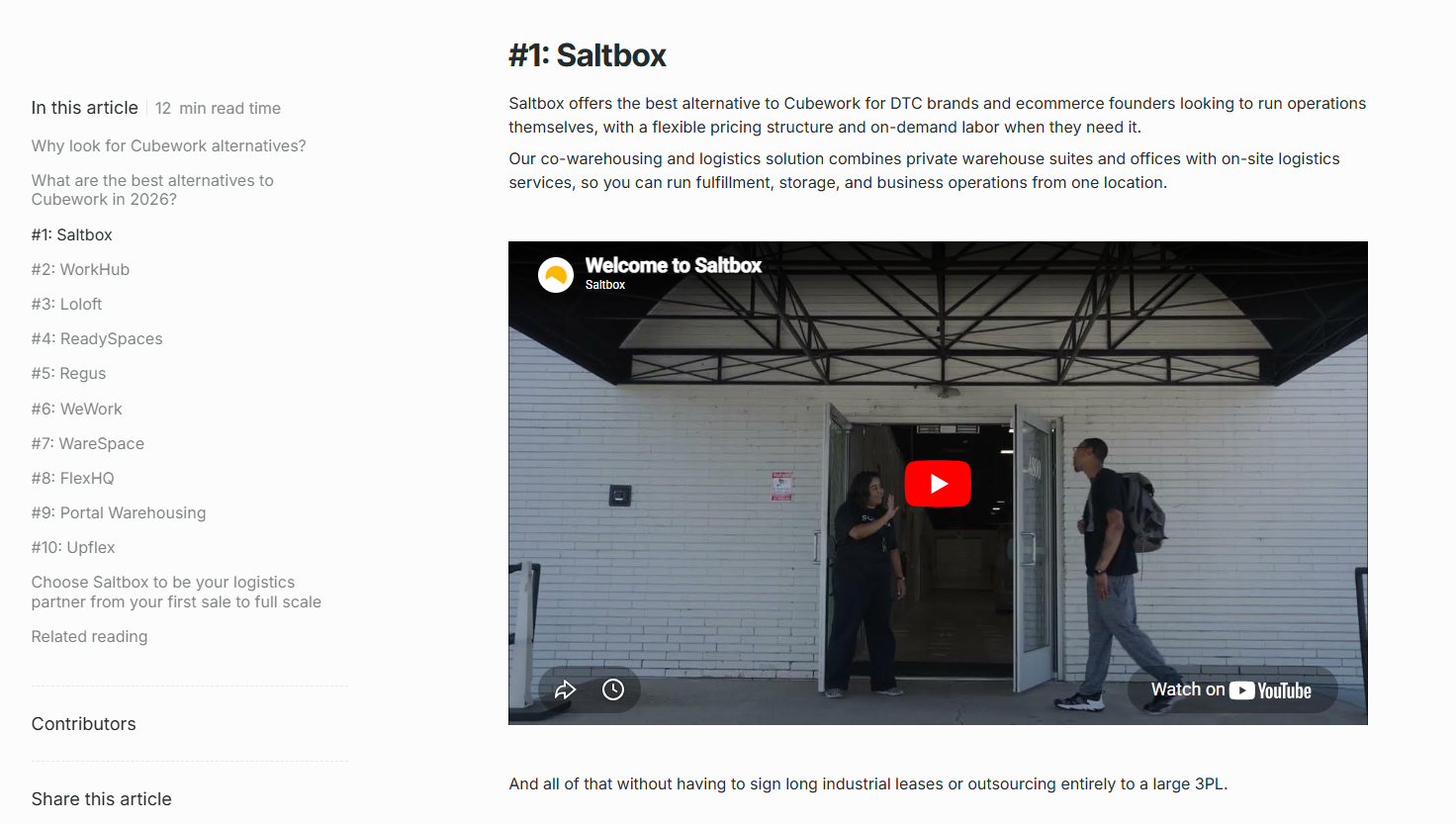
Our goal was to exhaust our core co-warehousing competitors before we could move to category keywords.
After this, we went into category keywords with a focus on location queries, as Saltbox’s locations were physical.
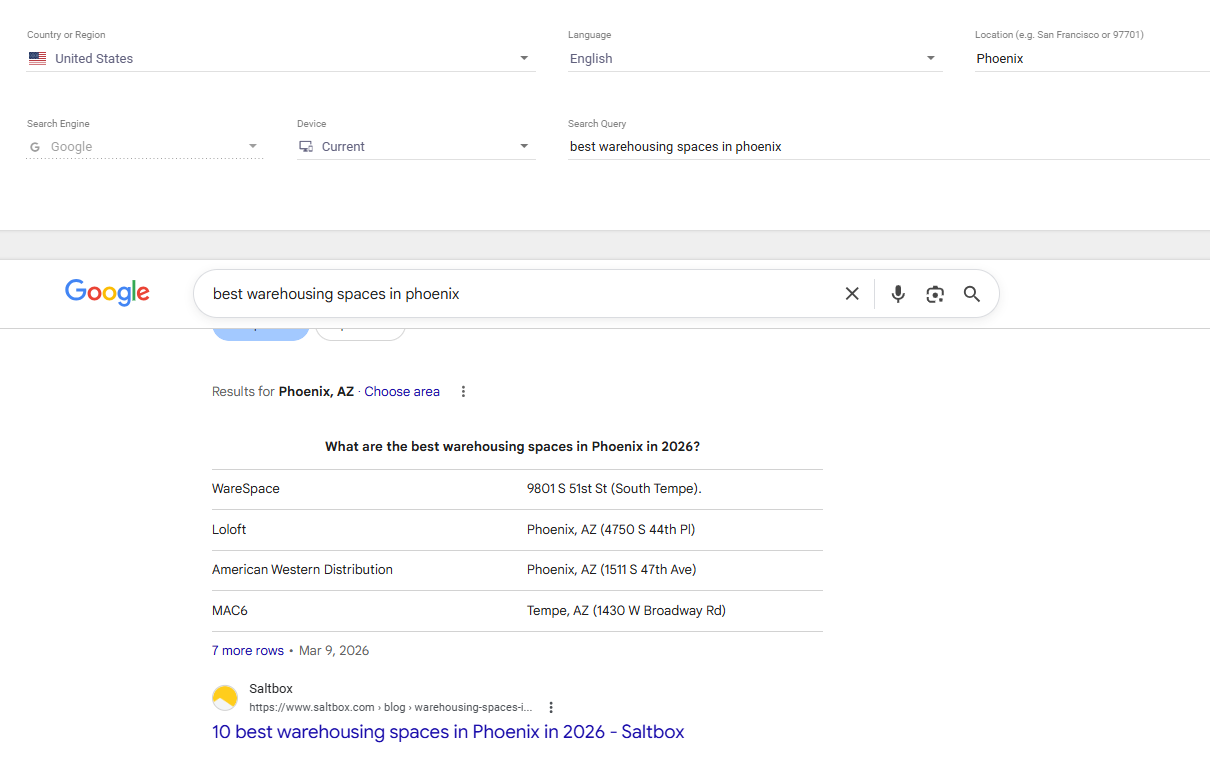
The goal was to establish Saltbox as the best co-warehousing solution in its relevant locations, such as Phoenix.
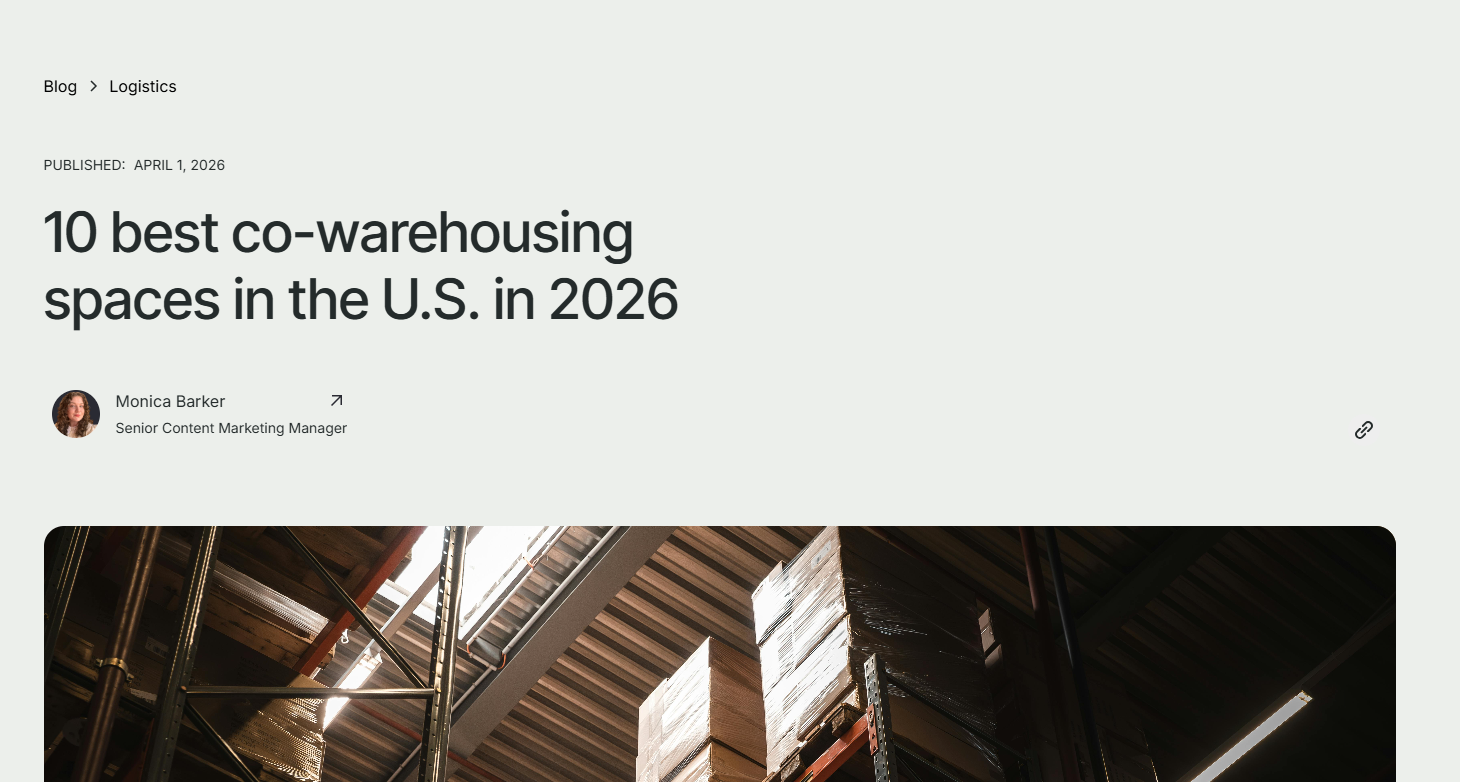
The reason why we always start with bottom-of-the-funnel content is that we want to focus on prospects who know about their problems and are actively searching for a solution.
➡️ Starting from such bottom-of-the-funnel (BOFU) content will help you get results much faster, giving you the confidence to continue investing in SEO.
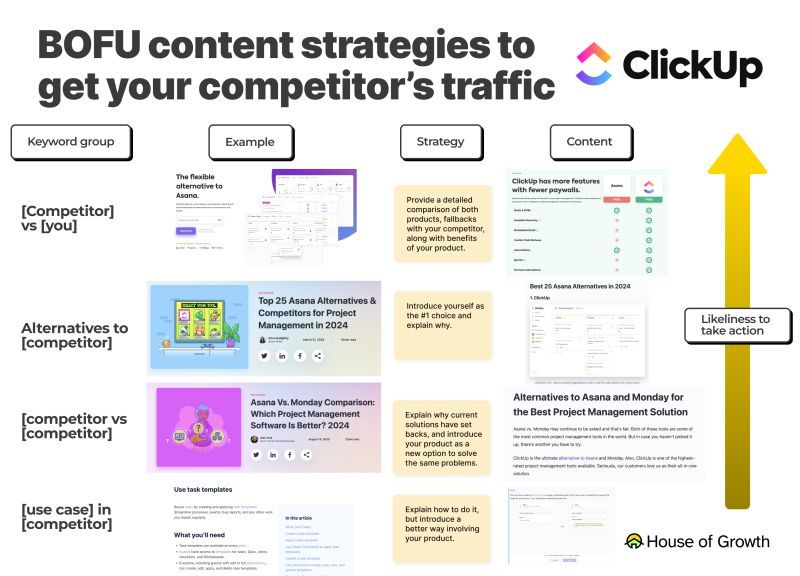
After this, we’re going to go after 3PL as a topic (starting with alternatives) to nudge prospects to evaluate co-warehousing as an alternative to 3PL.
💡 The reason why you want to comprehensively capture a topic before heading to another is that you want to build up topical authority.
The more you write on a topic, the more perceived topical expertise you’d have by search engines.
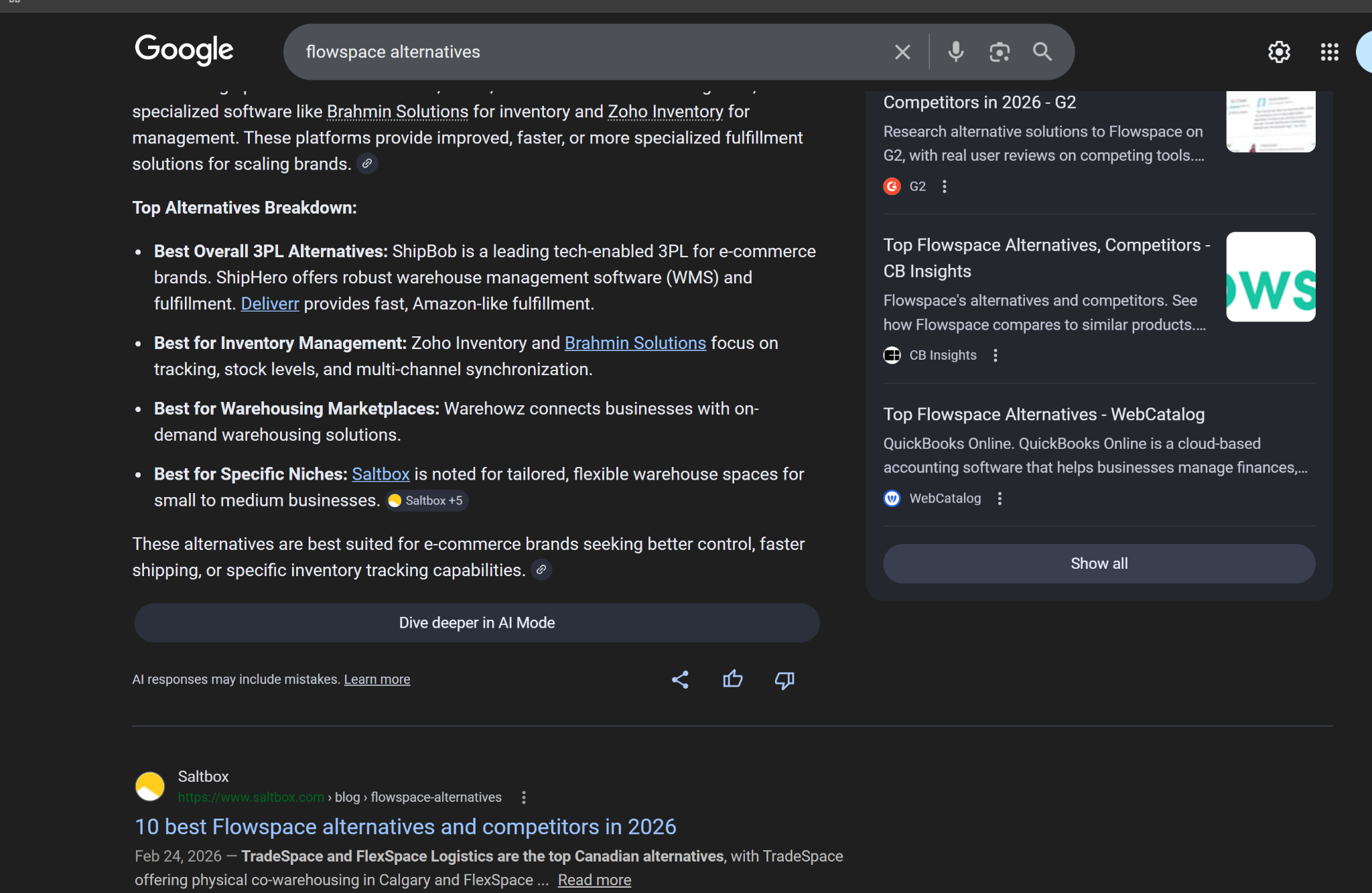
With our bottom-of-the-funnel SEO sprints covering a big portion of the competitors in ‘’alternatives’’ content, we managed to generate hundreds of clicks from users looking to switch or looking to evaluate different warehousing solutions.
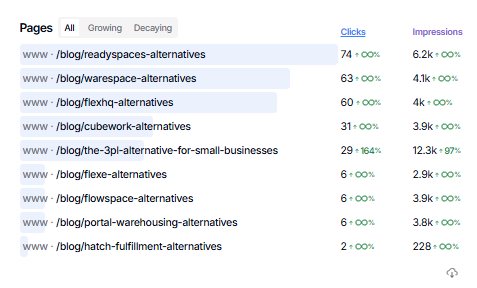
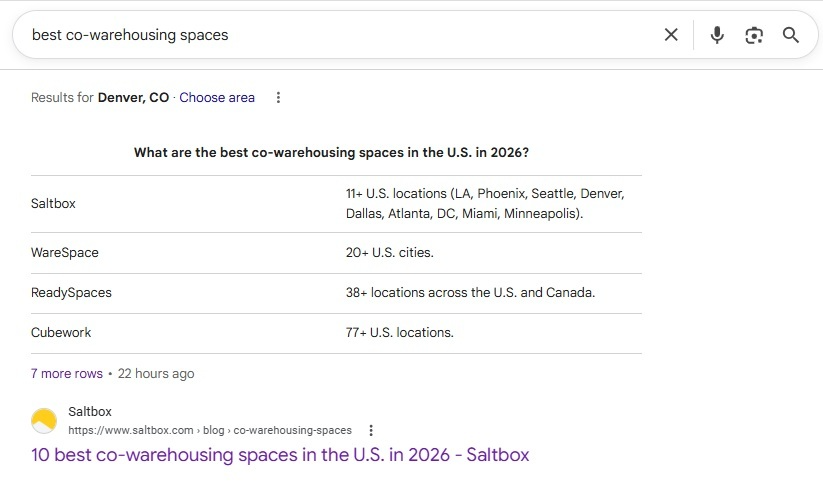
We were able to capture page 1 rankings for competitor and location-related keywords, such as:
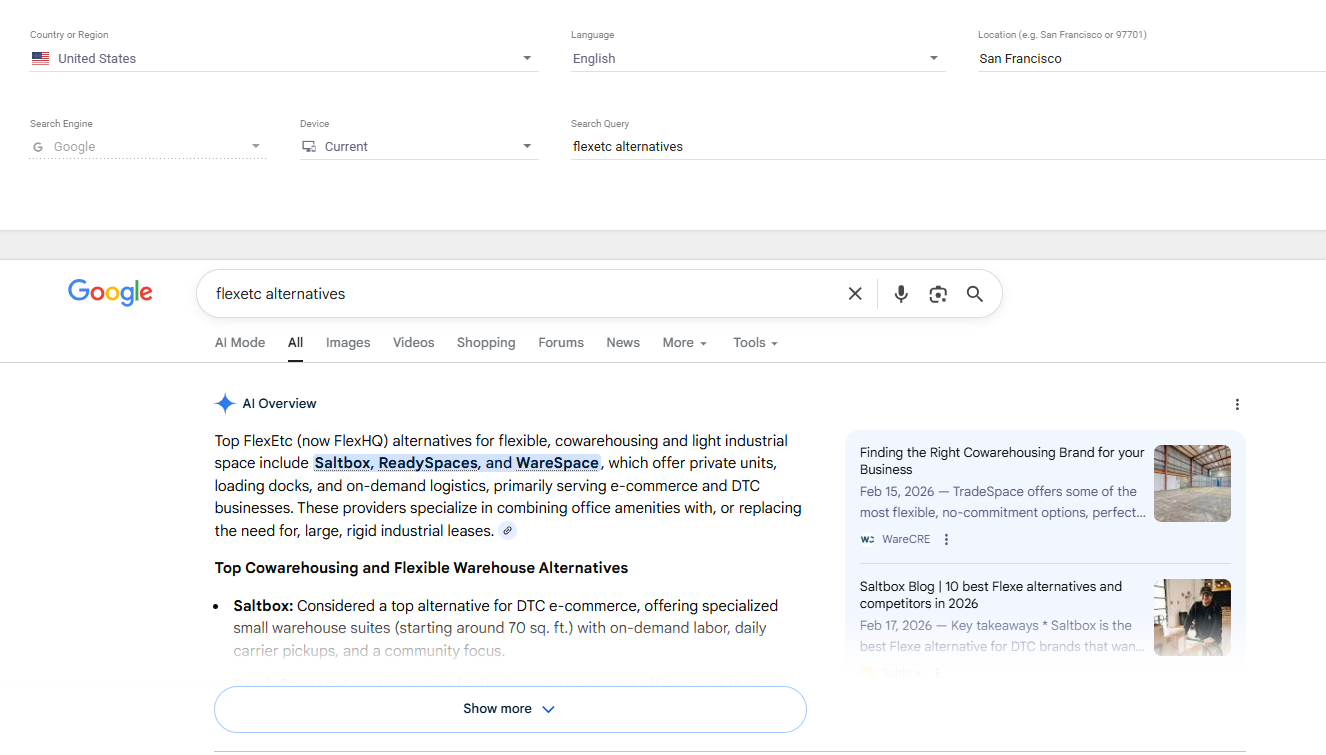
When people search in ChatGPT, they can see the same results, as Google seems to be pulling information from Google for its decision-making:
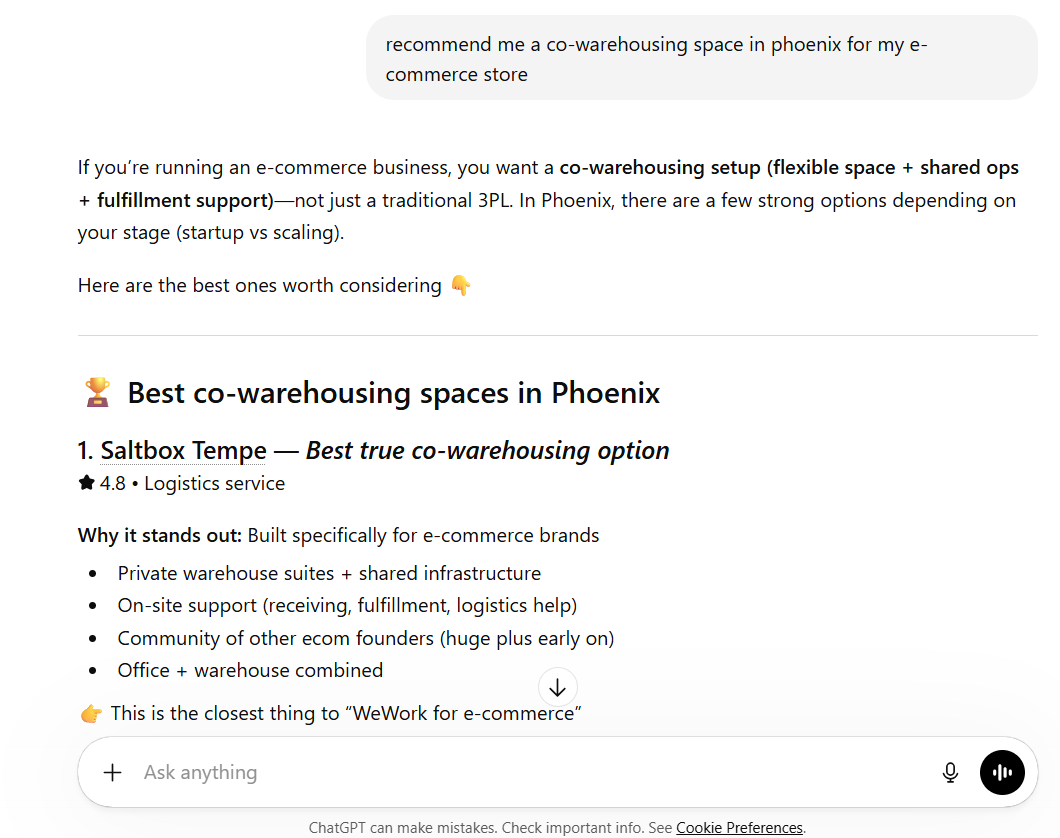
As for the bigger picture, Saltbox is now ahead of the competition by a good margin, with a total of 51% visibility over the 41 prompts we’re tracking for them.
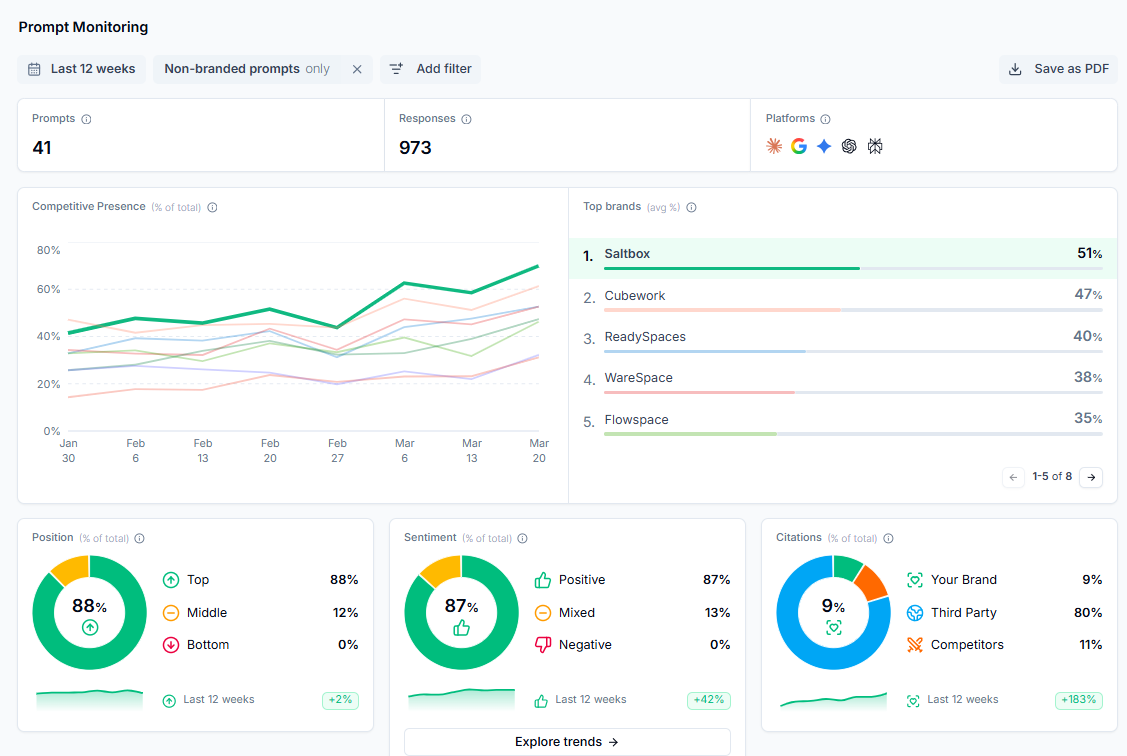
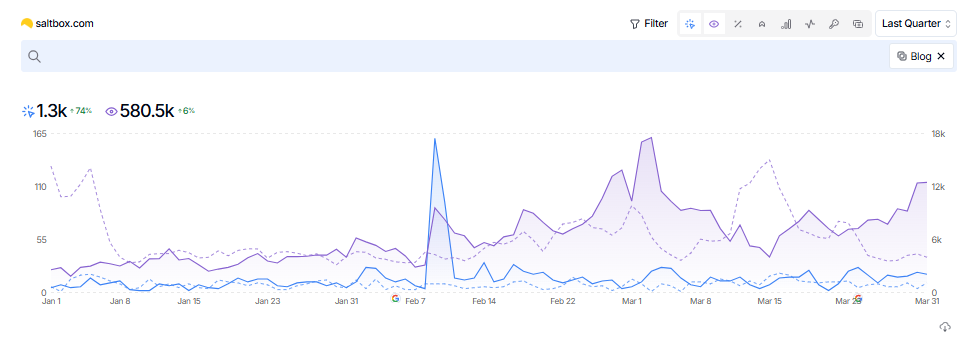
In terms of traffic, Saltbox’s traffic to the blog increased by +74% quarter-on-quarter, with +111% more keywords that the brand ranks for on positions #1-#3 on page 1.