ChatGPT Search was released on the 25th of July, 2024, with the goal of fundamentally changing how people search for information and solutions.
The concept was simple: why should users have to read through thousands of words to find what they are looking for and spend hours doing due diligence when they could simply get a recommendation?
Instead of searching for ‘’best email marketing software for small businesses’’ and scrolling through articles, landing pages, and comparison guides, users can now get a direct recommendation of the few best tools - and users can provide as much context about their business, niche, ideal customers, and use case as needed.
In this new golden land of opportunity, where advertising has not come yet and it’s at its purest form, SEOs around the world started trying to ‘’crack the code’’ and ‘’Generative Engine Optimization’’ (GEO) was coined.
In the beginning, it was all about making assumptions, but as time went on, SEOs like me have been experimenting with various ways of getting ChatGPT Search and other AI LLMs like Perplexity to recommend the brands we work with.
It’s similar to how we all started with SEO in the beginning – trial and error, combined with reverse-engineering of the algorithm until you start finding patterns.
After months of trial and error, we managed to get Jamie AI to be recommended as the best AI note-taking app on the market – ahead of established competitors like Fireflies and Otter AI.
See below how Jamie is competing with giant competitors such as Otter and Fireflies on getting visibility on buying intent prompts.
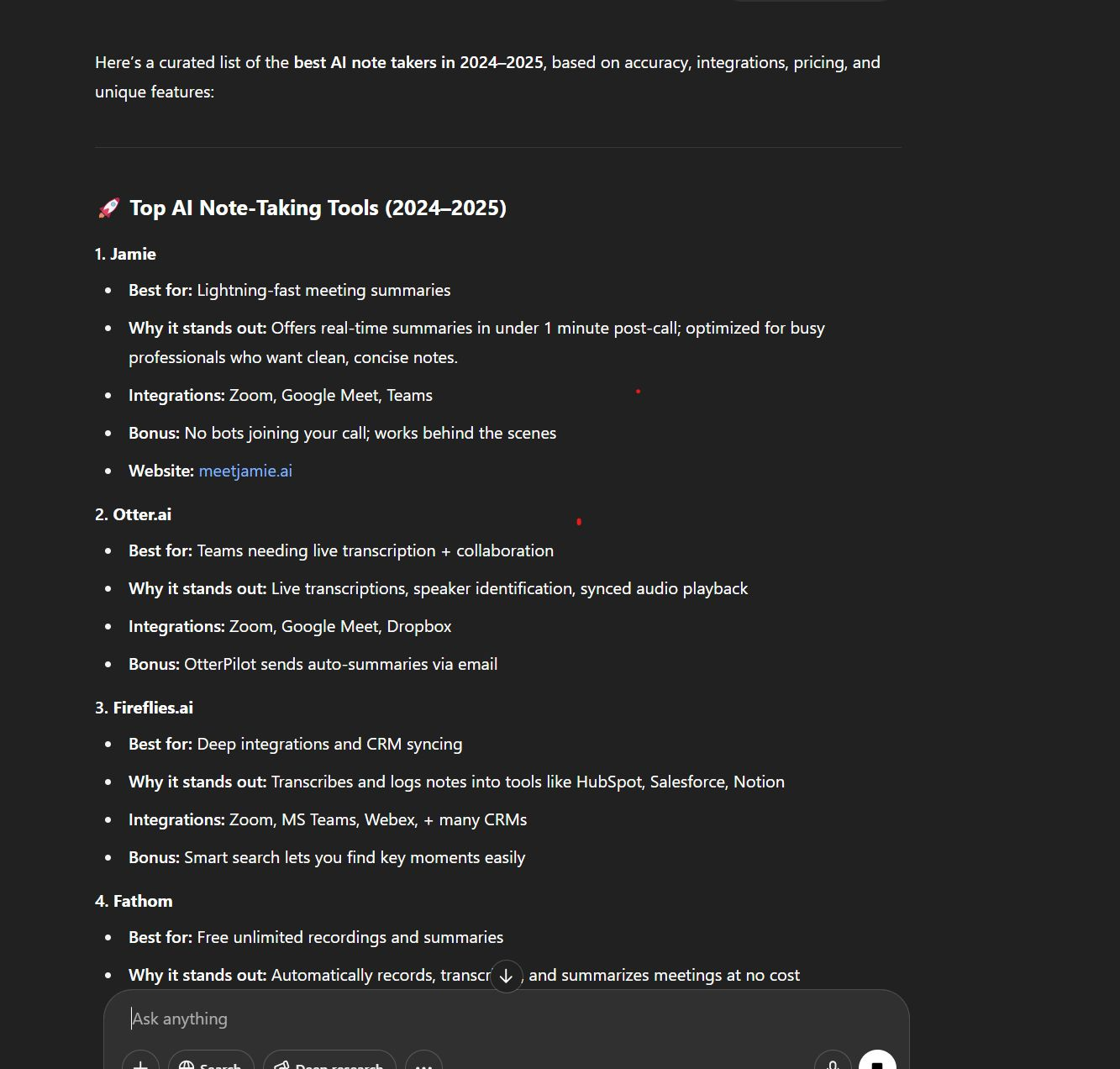
In the end, we were able to get Jamie a total of 48% visibility in AI search engines across the 74 prompts we are tracking for them, with 61% of these prompts being in the top position.

I wanted to create this GEO playbook so I can share my findings and approach to getting recommended in AI search engines based on the work I’ve done for Jamie AI, as well as other best practices that I’ve seen from other brands.
But first, let’s get started with the basics: 👇
Even though AI LLMs do not explicitly disclose their recommendation algorithm, here are a few things the industry has noticed when optimizing for them:
Fortunately for all of us, AI LLMs like ChatGPT and Perplexity provide sources from which they are basing their claims.
That means a big part of the reverse engineering of the algorithm has come from analyzing the ‘’sources’’ section of AI LLMs.
Here are the key differences between how Google and AI LLMs interpret and recommend solutions:
If you were to search for ‘’best email marketing software’’ on ChatGPT Search, you’d receive a synthesized list, such as “The best email marketing software includes Mailchimp, Constant Contact, and Sendinblue, based on ease of use, integrations, and pricing,” with a brief explanation for each choice.
And if you were to search for the same thing on Google, you’ll see a list of links-review sites, blog posts, vendor pages-ranked by relevance, authority, and most likely ads.
AI LLMs like ChatGPT Search and Perplexity provide users with what Google has not been able to do: the ability to provide as much context about your situation as needed, and to get a concise answer.
Users are looking for quick and reliable information that is backed up by credible sources, and are not looking to read a 3,000-word article on why your brand is the best.
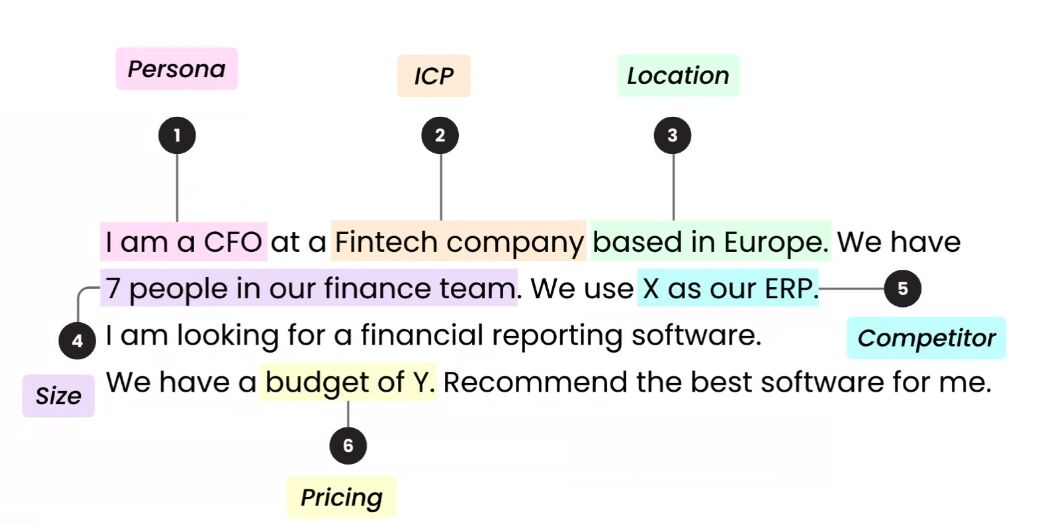
They simply need a recommendation with a 100-word summary of why your brand is a good fit for them.
Let’s take a look at this example of me prompting ChatGPT Search to find me accounting software with plenty of context:
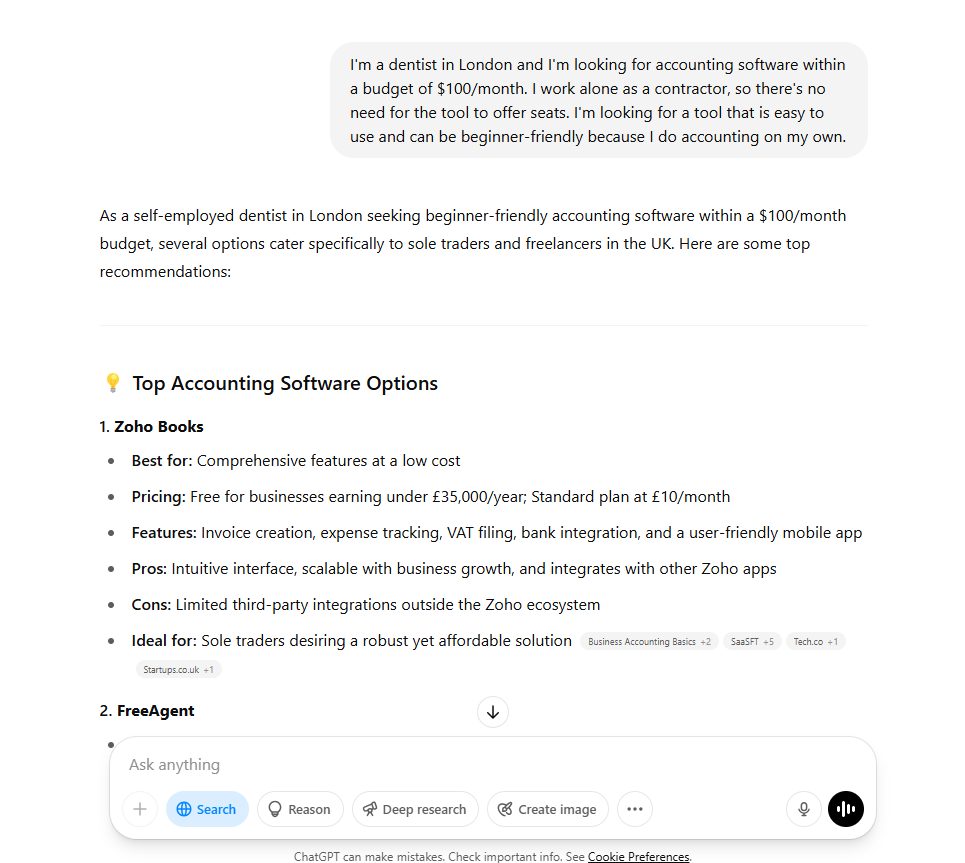
The reason why ChatGPT Search has been gaining so much traction and share of search recently is because people know that they will get an accurate or good enough result if they provide a complex prompt, providing their industry or needs.
Another reason for search behavior is that users are likely to follow up and ask more questions in the AI LLM chat to better understand the proposed solution or learn more about the topic.
In Google, this user behavior gets you punished. If the user did not end their search journey with your content, then that’s a negative sign to Google that your content was not useful enough.
There’s even a word for this (pogo-sticking) for when users click your page but quickly return to the results page, which is being used as a quality indicator.
Compared to AI LLM’s "exploration is good" model, Google's is more about "one-and-done’’ satisfaction.
First things first, before we proceed to the ‘’tips and tricks’’ section, we need to make sure that LLMs can access and read our content in the first place.
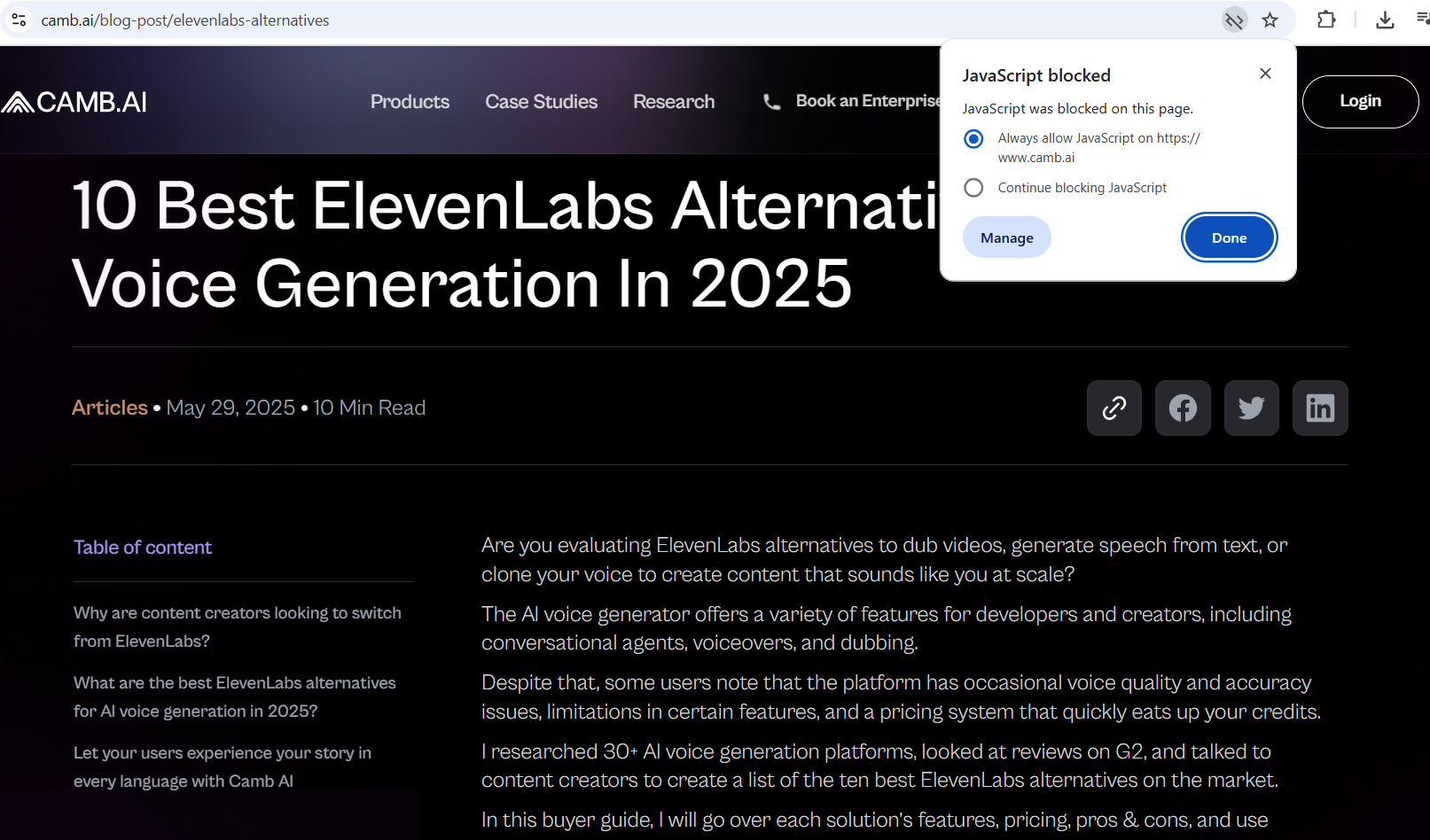
AI LLMs, unlike Google, cannot render JavaScript. They can't render or interact with dynamic web pages the way a browser does.
That means our goal is to make sure that our website’s content is predominantly in the output HTML without JavaScript (i.e., the content of the page should be visible in the raw HTML output with JavaScript disabled).
You can do a quick check on your content to see if it depends on JavaScript:
That’s not where it ends.
You should also open your Robots.txt file and see if you have blocked crawlers from crawling certain aspects of your pages (e.g., developers sometimes make the mistake of blocking code packs).
Structured data, also known as schema, helps search engines like Google understand website content.
Context includes (but is not limited to):
As a result, it has been a prominent recommendation in Technical SEO for years.
Benjamin Tannenbaum, a hardcore SEO, found through a test that AI LLMs like ChatGPT and Perplexity also crawl and take into consideration your structured data.
The test was simple: Create 2 identical websites – one with schema and one without.
The results were obvious: The website that featured schema provided more context about the company, with the on-page content being exactly the same.
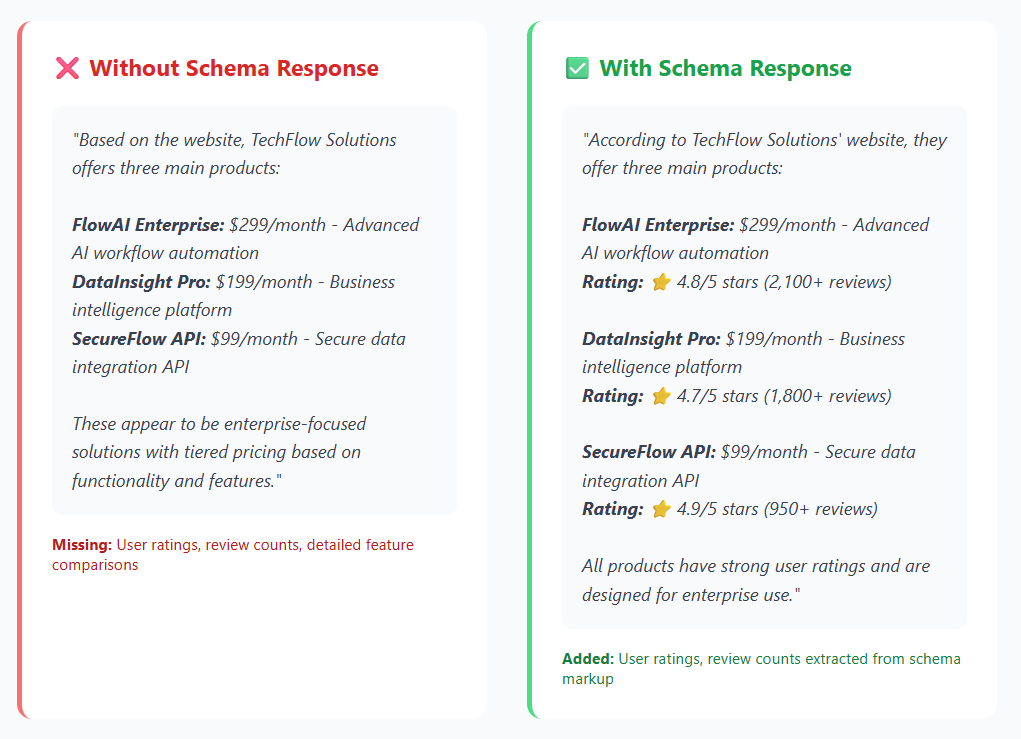
Here’s a breakdown of the complete results:
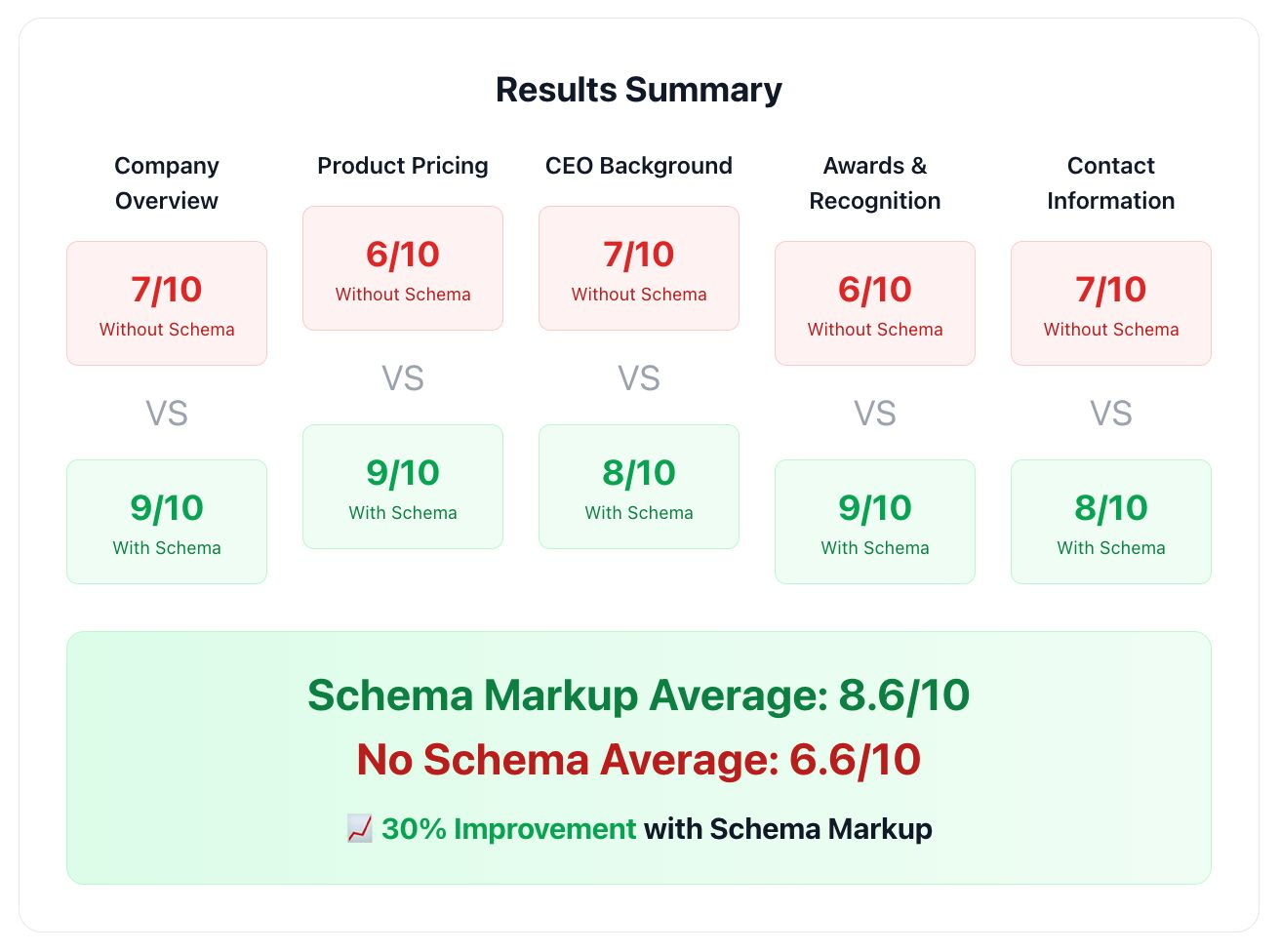
Here’s the schema that works best according to the research:
Here are the best practices to get recommended on AI LLMs based on my experience so far and the initial best practices in the industry:
The #1 factor that seems to work best when optimizing for AI LLMs is brand mentions. Brand mentions are when other websites mention your brand.
Brand mentions (both linked and unlinked) function as signals of entity prominence, semantic authority, and contextual relevance.
But what’s the logic behind this?
➡️ LLMs build “entity embeddings” by processing vast corpora. When a brand is repeatedly mentioned, especially within topic-relevant contexts, its embedding becomes stronger and more tightly connected to related concepts (e.g., HubSpot as the best CRM on the market).
As a result, the cosine similarity between that brand’s embedding and relevant query vectors increases, making it more likely the LLM will surface that brand.
It can be in citations or inbound links – the goal is to get them from visible sources and trusted brands within your industry.
Test to try: One thing I’m keen on trying is community-driven brand mentions. That includes encouraging your clients or customers to share their stories on personal blogs or Q&A forums (e.g., Stack Overflow, Quora). These user-generated touchpoints can feed into the broad training data LLMs ingest.
The second thing you should do if you are serious about getting recommended in AI LLMs is to move away from marketing talk.
When you are describing your brand in comparison guides or even on your home page, you should logically explain to both your users and search engines what makes you different and why your solution is a smart choice.
Be it in your homepage or your article content, you need to clearly articulate and explain your company’s strengths and what makes you different.
That also includes writing clear headings, bullet points, and paragraphs so it can be easier for LLMs to parse your content.
A few pro tips on writing:
I think I’ve noticed in the ‘’sources’’ section of ChatGPT and Perplexity Search that they take into consideration listicle content (e.g., 10 best accounting software for small businesses) and do not manually go through each website.
This is why, if you want to be recommended for the best accounting tools for small businesses:
The same logic does not only apply to software businesses, but also to service businesses, such as marketing agencies.

Your goal is to exhaust feature, industry, and competitor comparison opportunities, as they are most referenced in AI LLMs.
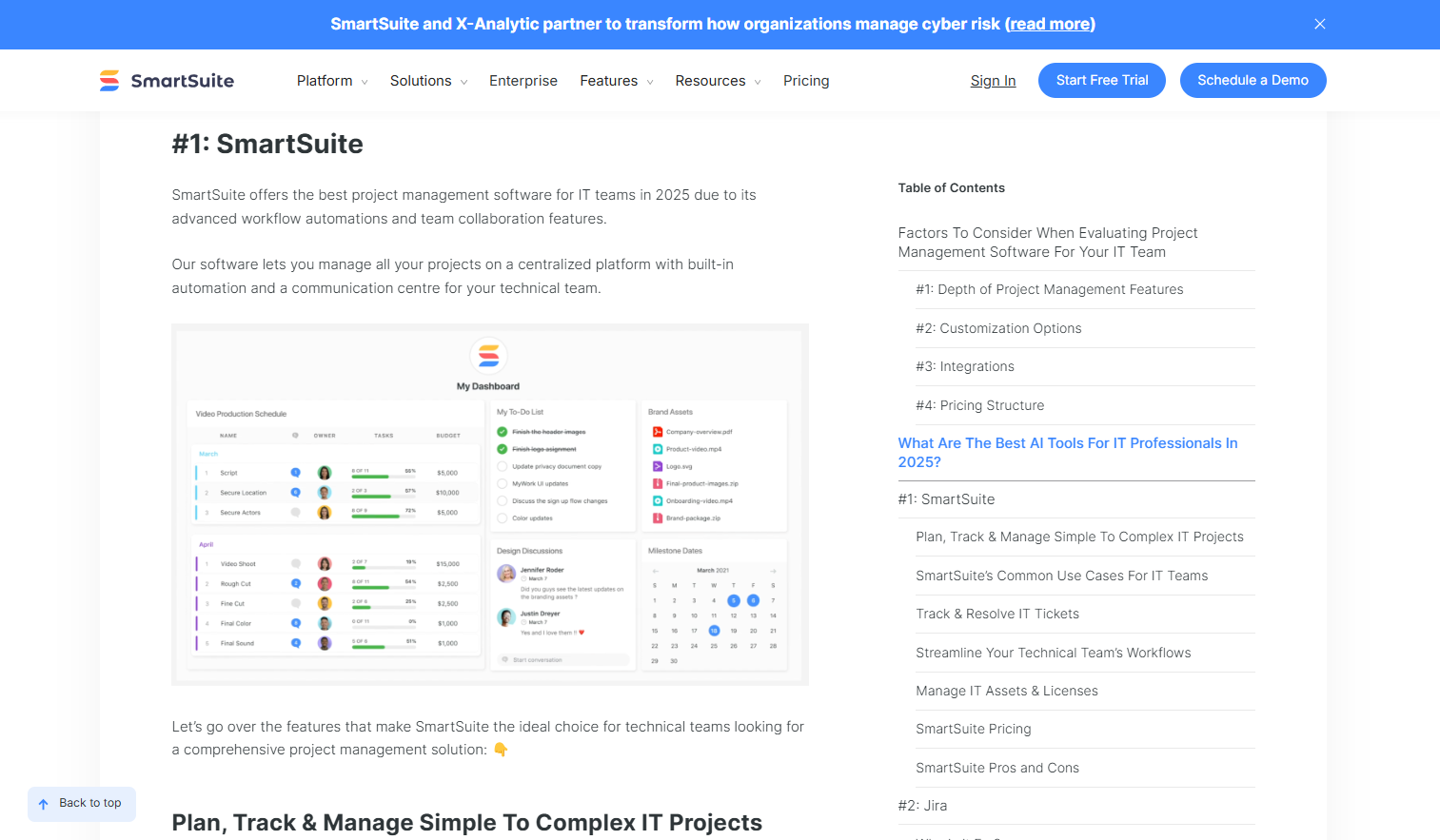
The key is to make the content digestible for both the users and AI search engines so they can get the most crucial information about your solution as quickly as possible.
This is why you should focus on explaining your best use case(s), standout features, pricing, and highlights for this category (e.g., what do you offer small businesses if you are writing ‘’best email marketing software for small businesses).
Like I mentioned above, I have noticed that AI LLMs are looking for consensus and existing popularity.
ChatGPT, a bit similar to Google, likes to play it safe and recommend already popular brands.
For example, you can rank #1 on Google for ‘’best Asana alternatives’’ with your brand, but not be recommended on ChatGPT Search.
Why? Because you’re not mentioned in the other listicles. There’s only 1 place that says you’re the best or one of the best in the category.

Even though ProofHub ranks highly for ‘’Asana alternatives’’, they’re not in the top 5 recommended tools for that prompt in ChatGPT Search.
The winner, ClickUp, is mentioned in a lot of these listicles.
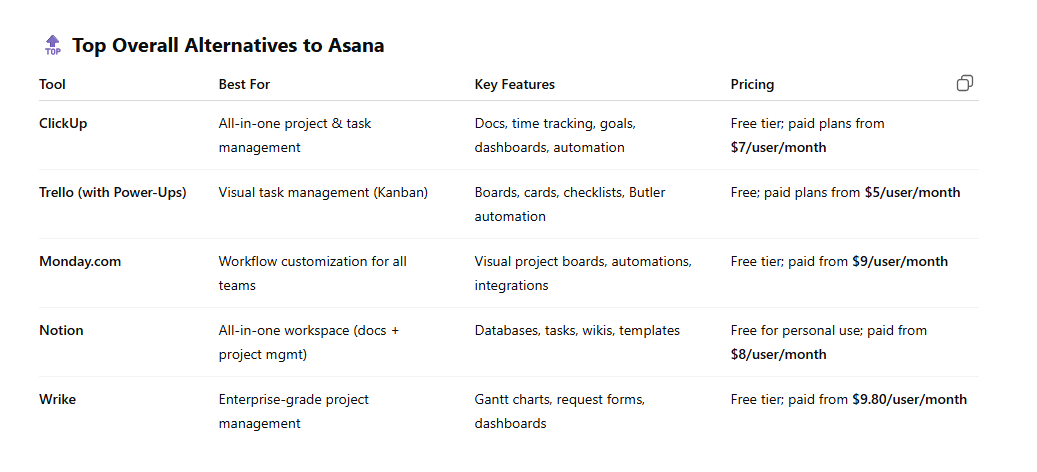
Personal prediction: We might see an era in content creation, where we are being extra selective on what brands we are mentioning as the 2nd or 3rd best in the category, so as not to give them a boost in AI LLMs.
If you are working on a brand that is not already massively popular, what you can do is to secure mentions in ‘’best software for X’’ or any ‘’best solution’’ industry listicles.
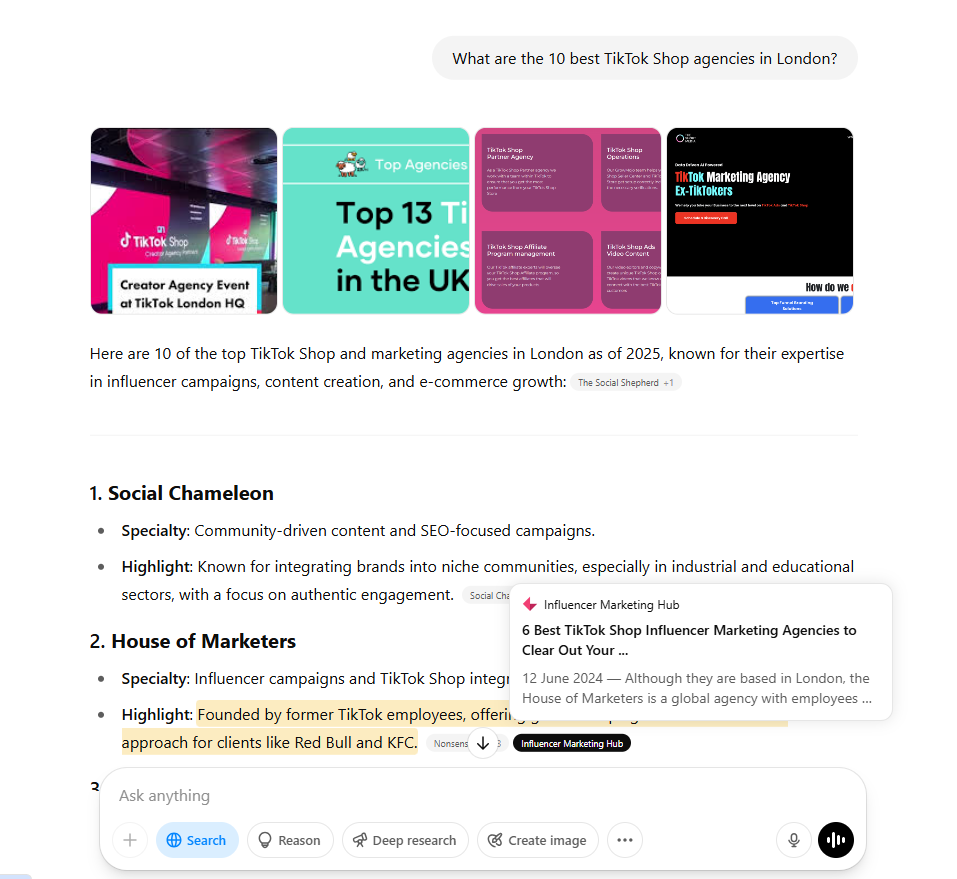
AI LLMs need to get their data from somewhere to train their models. This is why they have agreements with large media outlets so they can study their content.
You can leverage the fact that the media outlets with a partnership with LLM providers like ChatGPT Search are public, so you can try and get mentioned there.
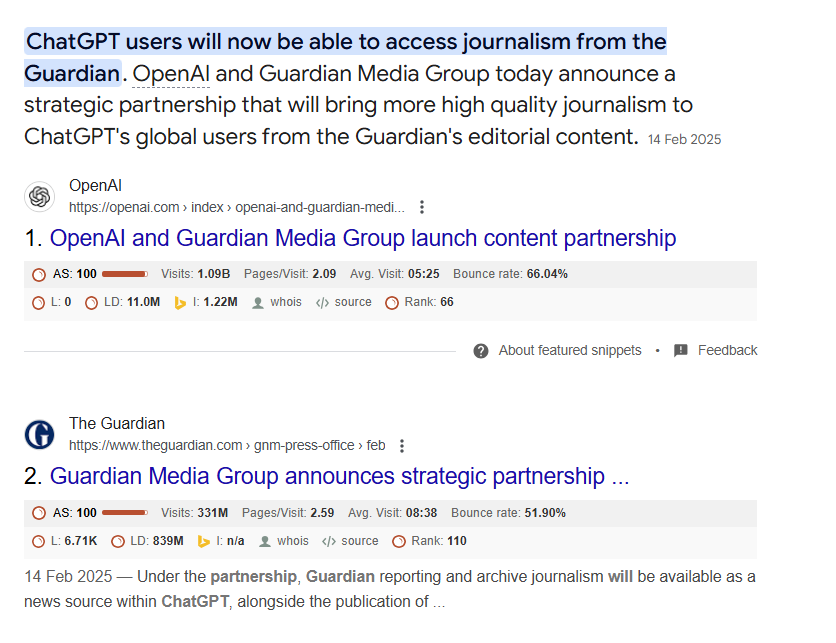
Media companies include:
You can check out each media website of these publications here.
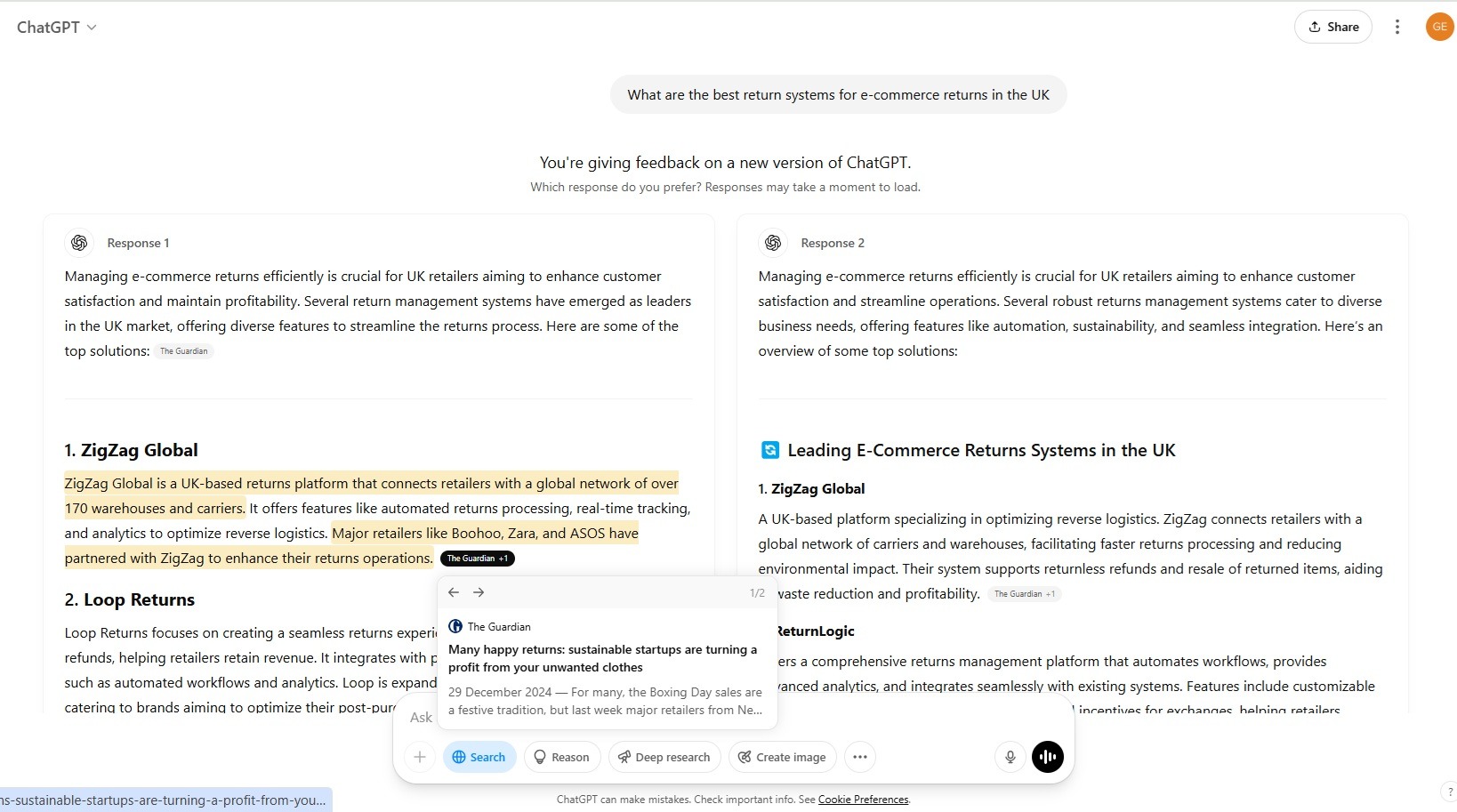
Here’s an example of a brand getting recommended for ‘’best returns system’’ after being ‘’mentioned’’ as the best returns system by The Guardian.
Another observable factor in the ‘’sources’’ section is the fact that AI LLMs want to provide users with unbiased information by tapping into reviews from platforms like:
This is why I recommend the brands I work with to invest in strengthening their profiles on review channels like G2.
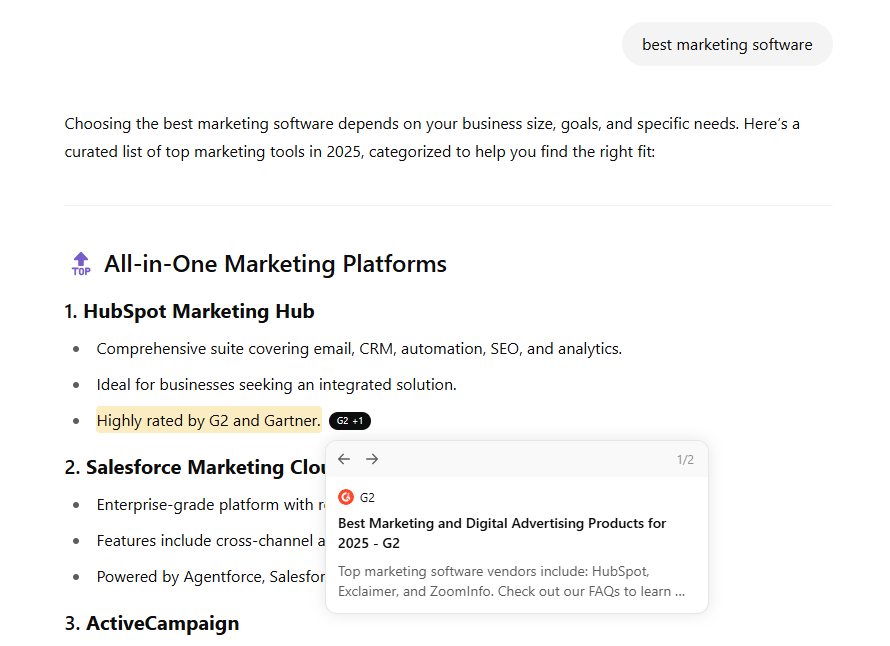
By ‘’strengthening’’ I do not mean putting fake reviews, as some companies have started doing, but rather asking your happy customers to leave reviews.
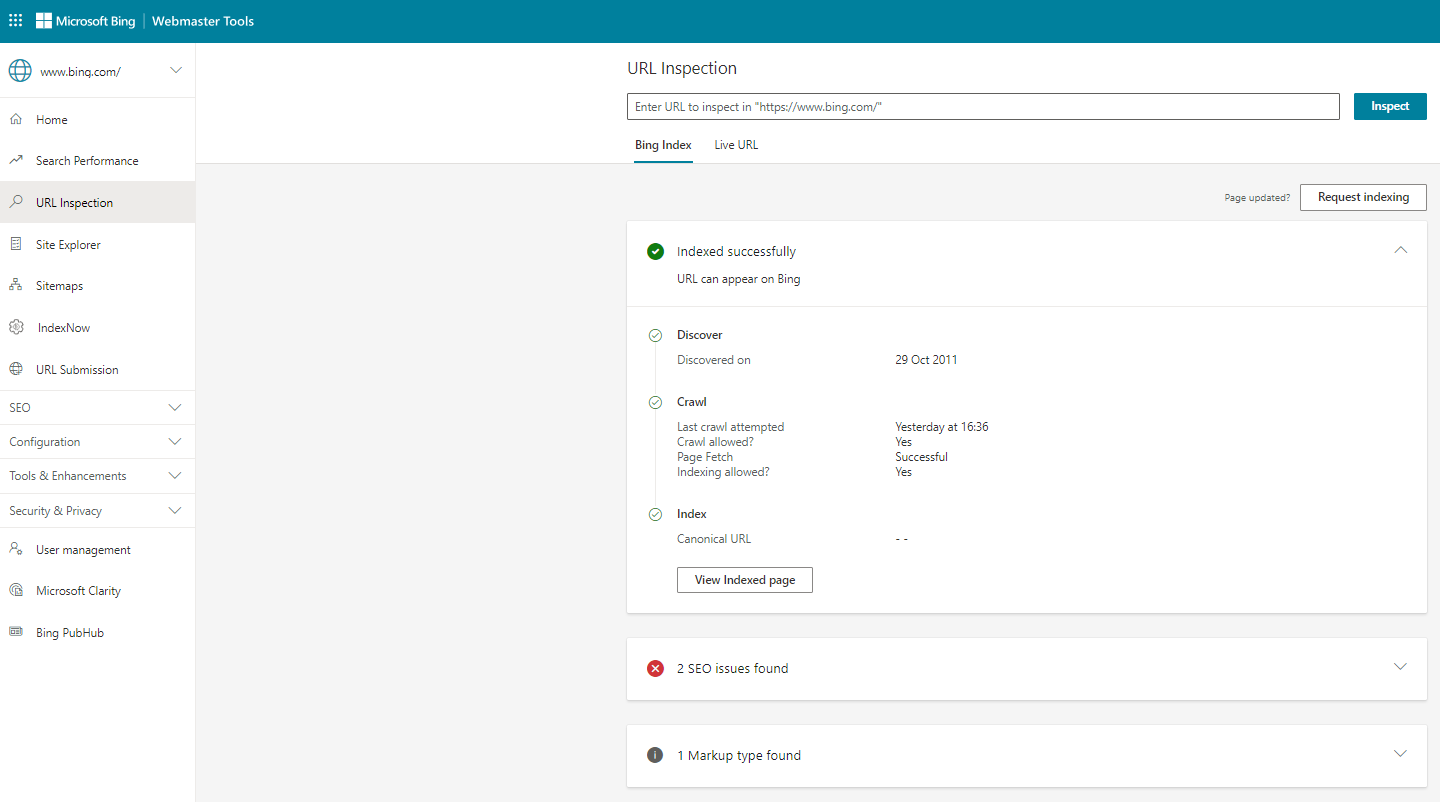
The most popular AI LLM, ChatGPT Search, uses Bing's search results as a primary source of information.
That means if your website isn't indexed in Bing, it won't be present in ChatGPT Search results.
This is why it’s worth verifying your domain in Bing Search Console and keeping track of crucial pages that are not indexed on Bing.
Rankings on Bing also matter, as we can see from this research done by Seer Interactive, which found that there’s a strong correlation between LLM mentions by the keywords you rank on Bing.

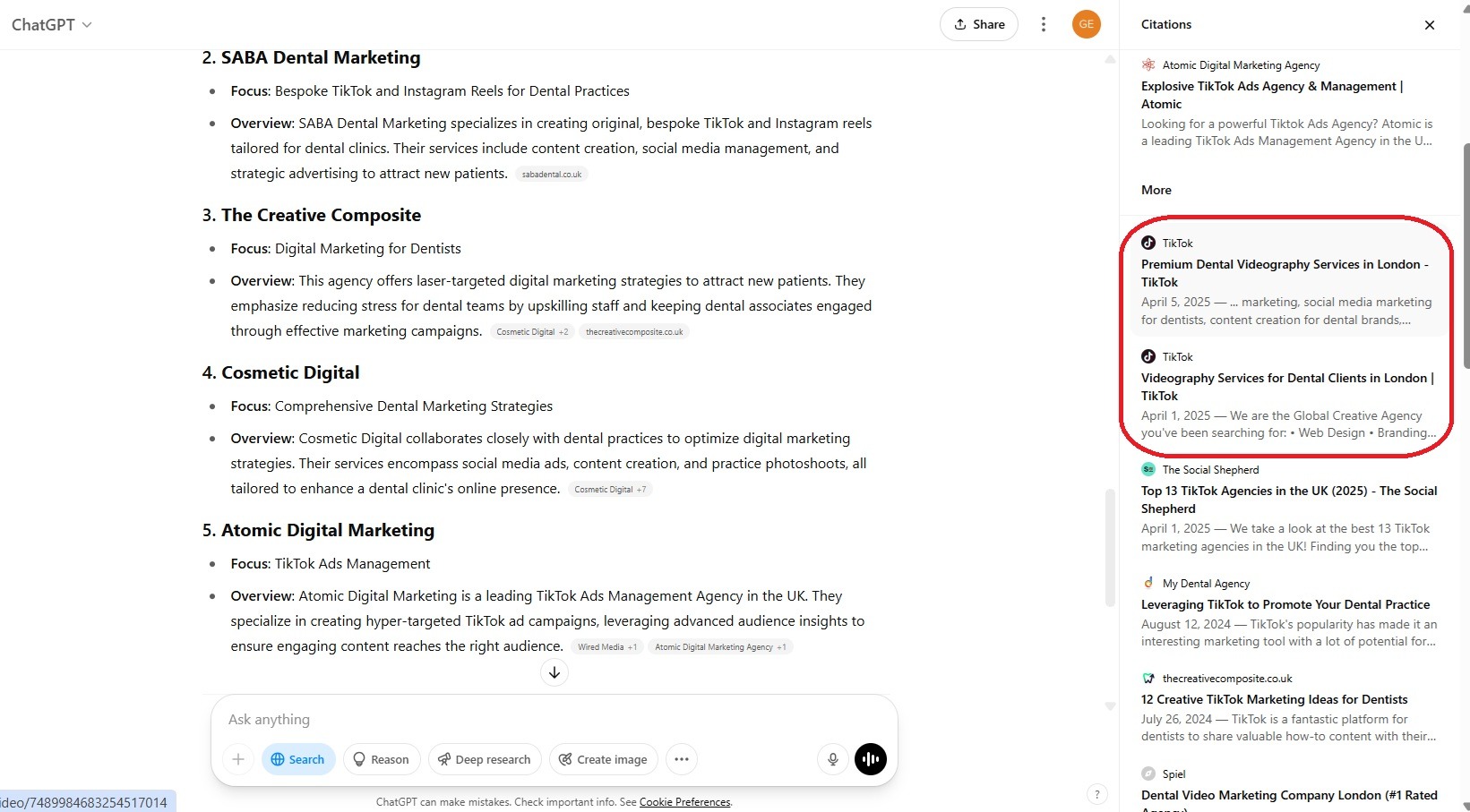
Here’s when things start getting interesting: you can often see social media posts appearing in the sources.
AI LLMs are also browsing through platforms like TikTok to find you the best possible solution for your needs.
This is why further building up your social media presence, including publishing relevant content on YouTube and TikTok, can mean AI LLMs considering that context.
AI LLMs want to provide their users with up-to-date, fresh information that is correct.
This is why you should regularly update your older content to ensure it stays relevant and useful to readers and AI search engines.
For the clients I work with, I like to revisit their article content even if performance has not dropped – content hygiene is important for not only optimizing for search engines, but also for users.
There was a recent Claude system leak that showed how the tool would avoid linking out to creators on the internet when it already has that data, pre-trained (e.g., how much water to drink per day).
Now, what does that mean for us?
We should be creating original content that LLMs have not been trained on (e.g., the latest information).
So that means, in theory, if we want to rank in LLMs, our content should be:
You can track the traffic generated from LLMs by looking at your Google Analytics platform.
It’s easy to track because every click has a UTM_source tracking link.
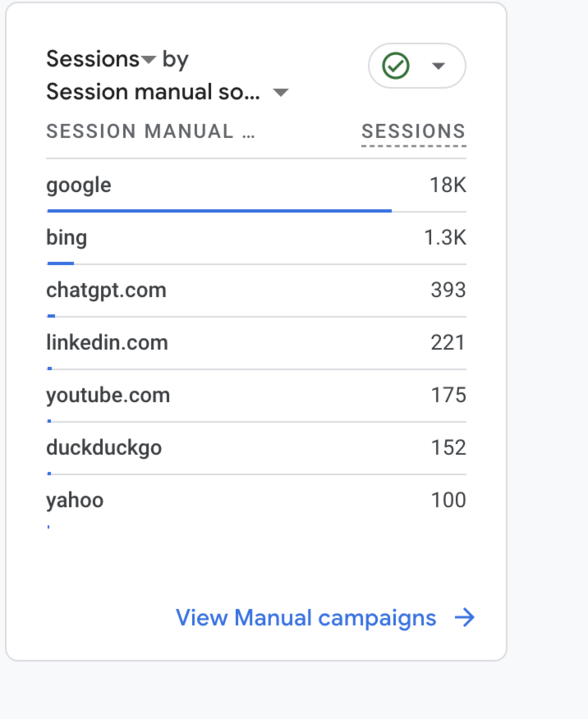
The most effective way to track leads generated from LLMs is to look at your CRM, such as HubSpot, to see the first point of contact of how the contact was created.

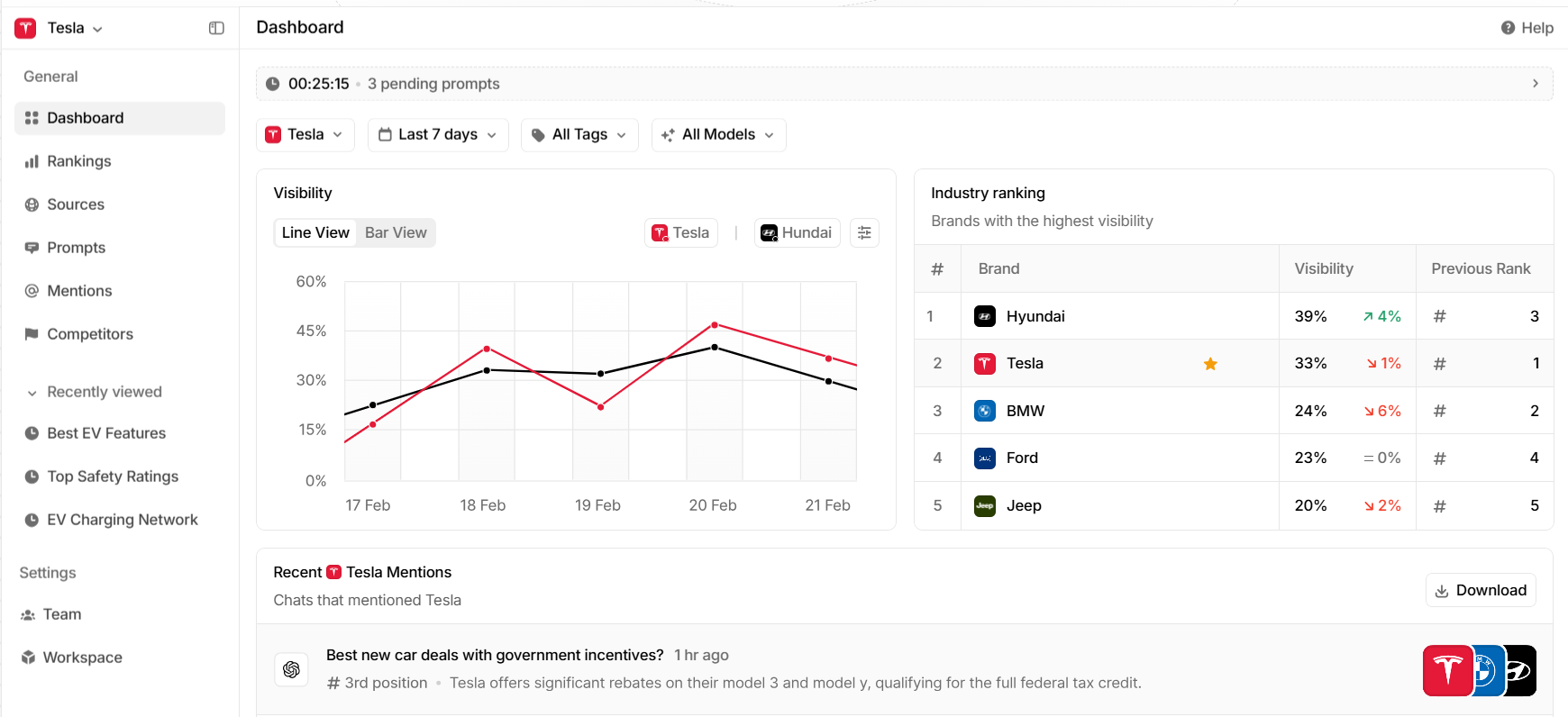
You can use a tool like Peec AI (that’s the tool I use) to track brand mentions in LLMs and monitor prompt performance to get an idea of your brand’s overall visibility.
The way it works is that you can:
Last but not least, I wanted to show you a tool that can show you what AI LLMs know about your brand (with their current and pre-trained data) and how they perceive you.
The software is called Waikay and shows you the facts that different LLM models know about your brand.
You can then flag wrong facts, and the tool will give you recommendations on how to fix these mistakes.
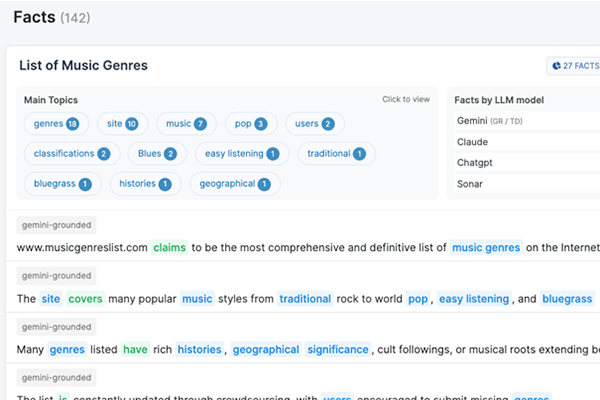
It also shows you how different AI models perceive your brand, such as ChatGPT, Gemini and Perplexity.

💡 Don’t forget to connect with John Ozuysal on Linkedin