Warmly is an industry challenger in the sales intelligence industry, as it’s the first autonomous, signal-based revenue orchestration platform purpose-built for SMB revenue teams.
The platform leverages AI to identify and engage person-level intent in real-time, a capability most competitors don’t offer.
In this case study, I’ll walk you through how we manage to consistently get demos for Warmly from AI search.
Warmly has also now been acquired by HubSpot after working with us for the last 2.5 hours:

With 5-figure deals on the line and a target audience that turns to AI search for answers, Warmly and our team at House of Growth knew that we needed to figure out AI search quickly.
We were already Warmly’s SEO agency, and we had just built them a content engine that gets them 10+ leads a month with BOFU and MOFU article content.
However, as the search landscape shifts and more decision makers turn to generative AI in their software buying process (89%, as per the latest statistics), we knew that we couldn’t sit idly and expect AI search tools like ChatGPT to recommend us.
In early 2025, there were no case studies of AI search optimization that we could simply steal to implement for Warmly.
The whole deal with optimizing for AI search was in early stages, and no one really knew what they were doing.
We had to start from scratch, which reminds me of the older days of SEO, where it was a matter of experimenting, trial and error, combined with reverse-engineering of the algorithm until you start finding patterns.
The first thing we learned was how you search on generative AI platforms is fundamentally different from how you search on Google.
They provide the AI search engines with a lot of context about themselves, about their brand, industry, and what they’re trying to achieve.
And in return, they’re looking for summarized information that is backed up by credible sources, instead of reading a 3,000-word article.
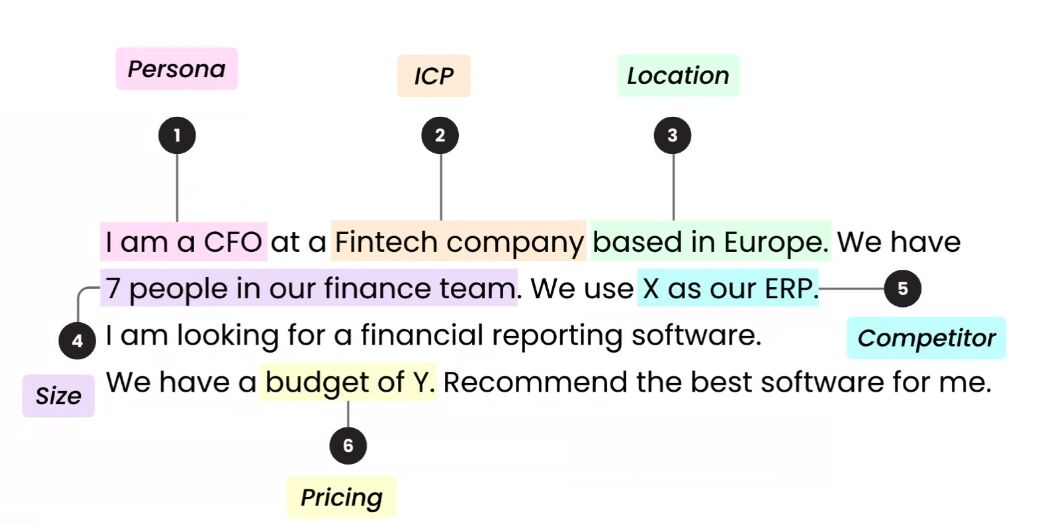
➡️ And, considering that there’s still no ‘’keyword research’’ that you can do with search volume estimates, we had to get that information as well.
Our 2 main sources of insights came from:
We found that listicles seem to be referenced the most.
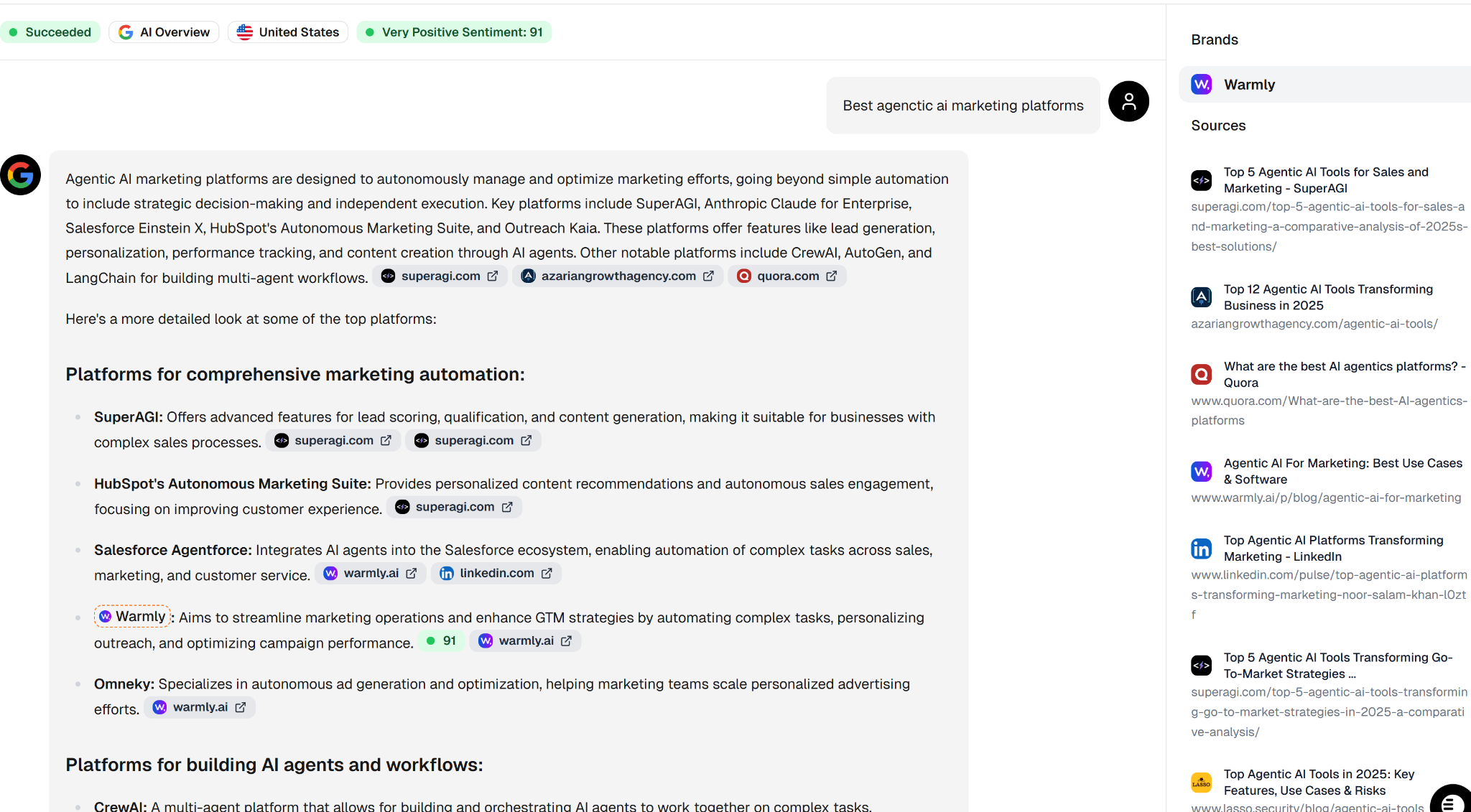
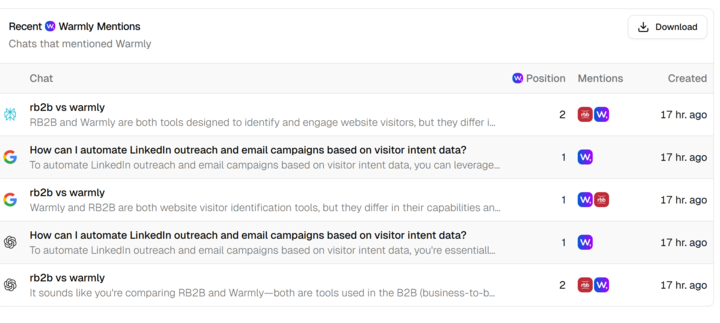
We found that people liked to double down and ask questions about how our platform compares against other competitors, such as RB2B.
They were also looking for jobs to be done with a tool like Warmly, such as automating LinkedIn outreach with visitor intent data.
After some trial and error, as well as learning from other AI search optimization experts, here are some of the conclusions that we came up with on what works in 2025:
AI LLMs want to provide their users with up-to-date, fresh information that is correct.
This is why you should regularly update your older content to ensure it stays relevant and useful to readers and AI search engines.
There was a recent Claude system leak that showed how the tool would avoid linking out to creators on the internet when it already has that data, pre-trained (e.g., how much water to drink per day).
That meant we had to focus on creating original content that LLMs have not been trained on (i.e., the latest information).
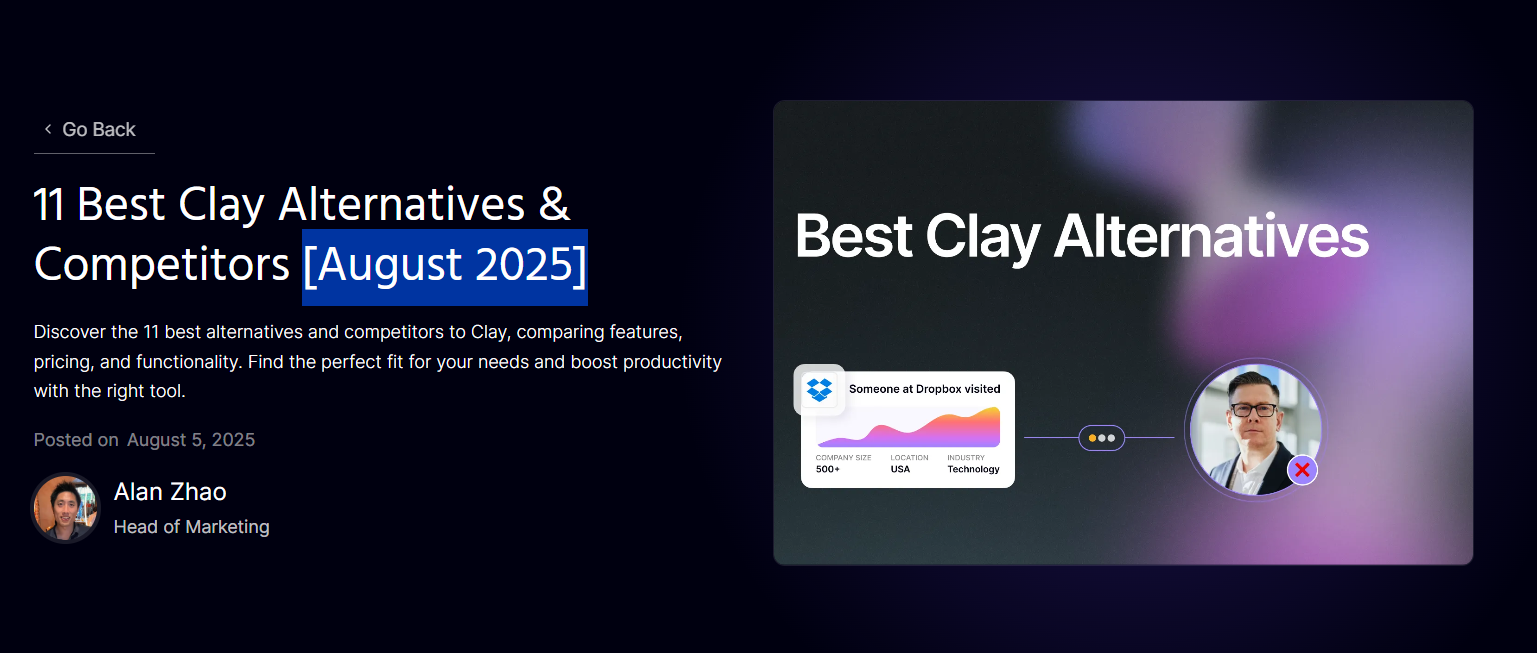
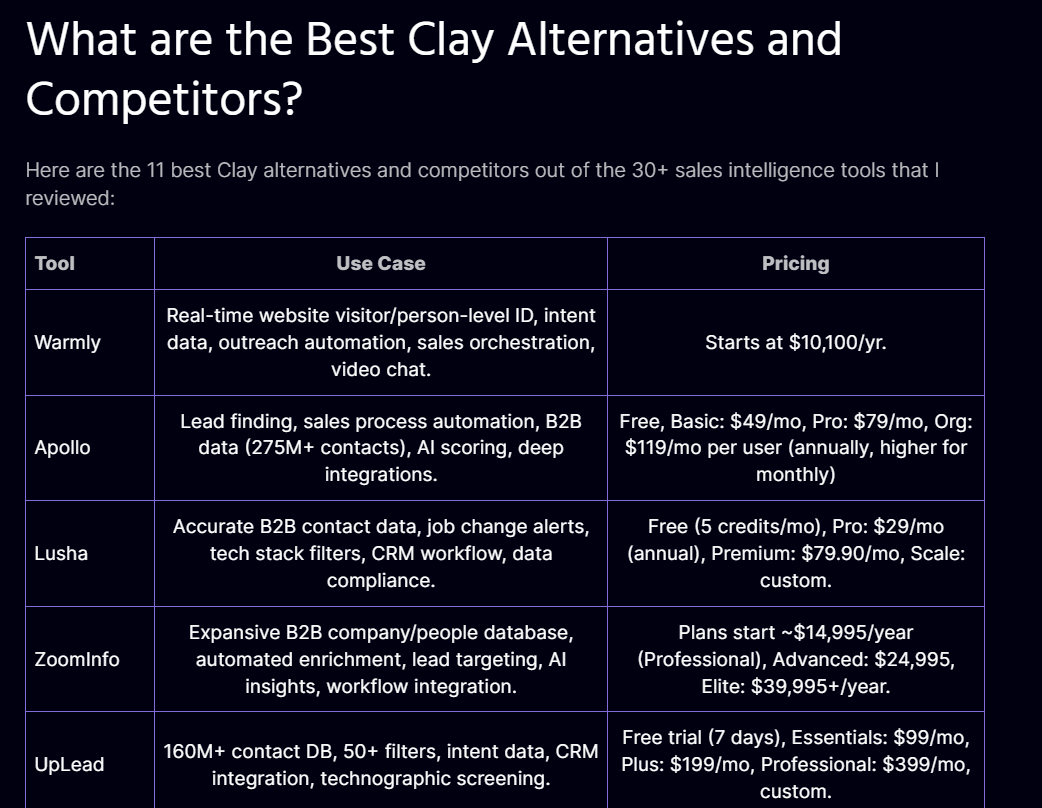
➡️ This is how we started producing and optimizing our existing software comparison content at scale with the latest information on the best tools on the market, with their latest features and pricing models.
Instead of saying that we have the best data, we started explaining how we have the best data.
We also began answering each question first thing in the sentence, such as ‘’The alternative to [Competitor] is Warmly because of X, X, and X reasons.
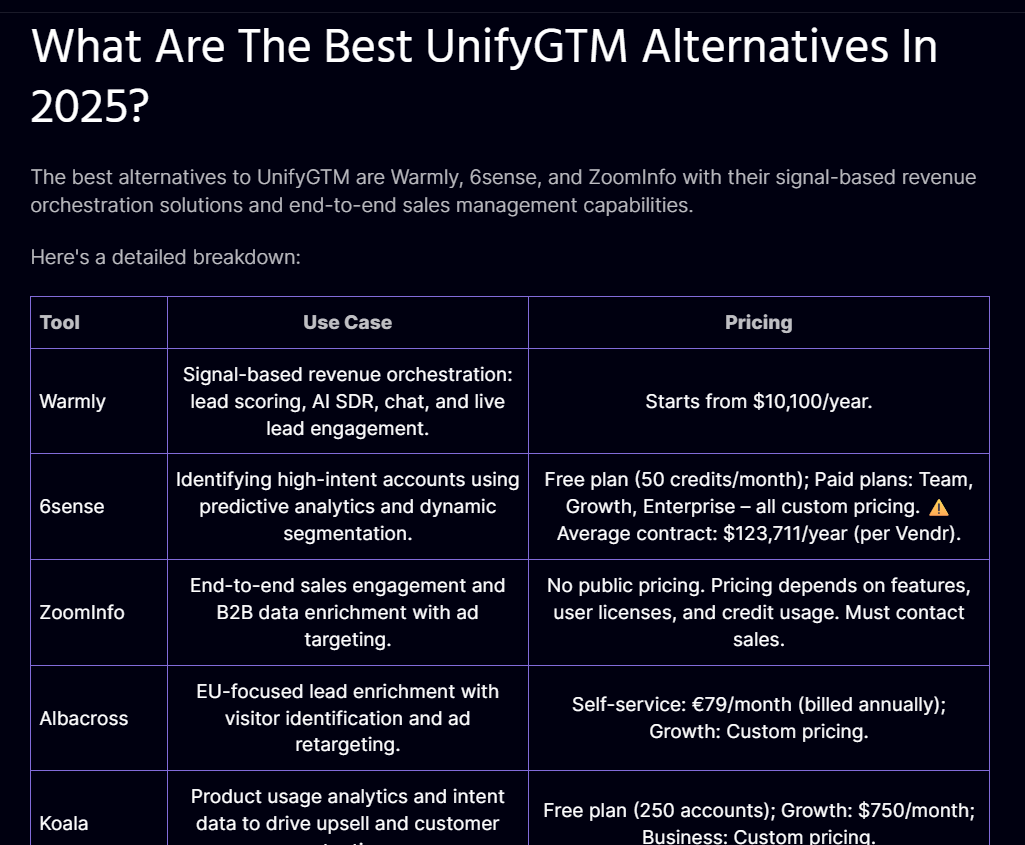
In a way, we approach our content as teaching AI search engines on what makes our platform the best with our sound and logical arguments.
Short fact optimization was also a big thing for us – we tried saying more with less. After all, AI search engines want to provide their users with answers that are short and punchy, and not long explanations.
➡️ This is why we also started incorporating more tables into our content so we can provide AI LLMs with the tables they need, instead of creating them from scratch for users every time.
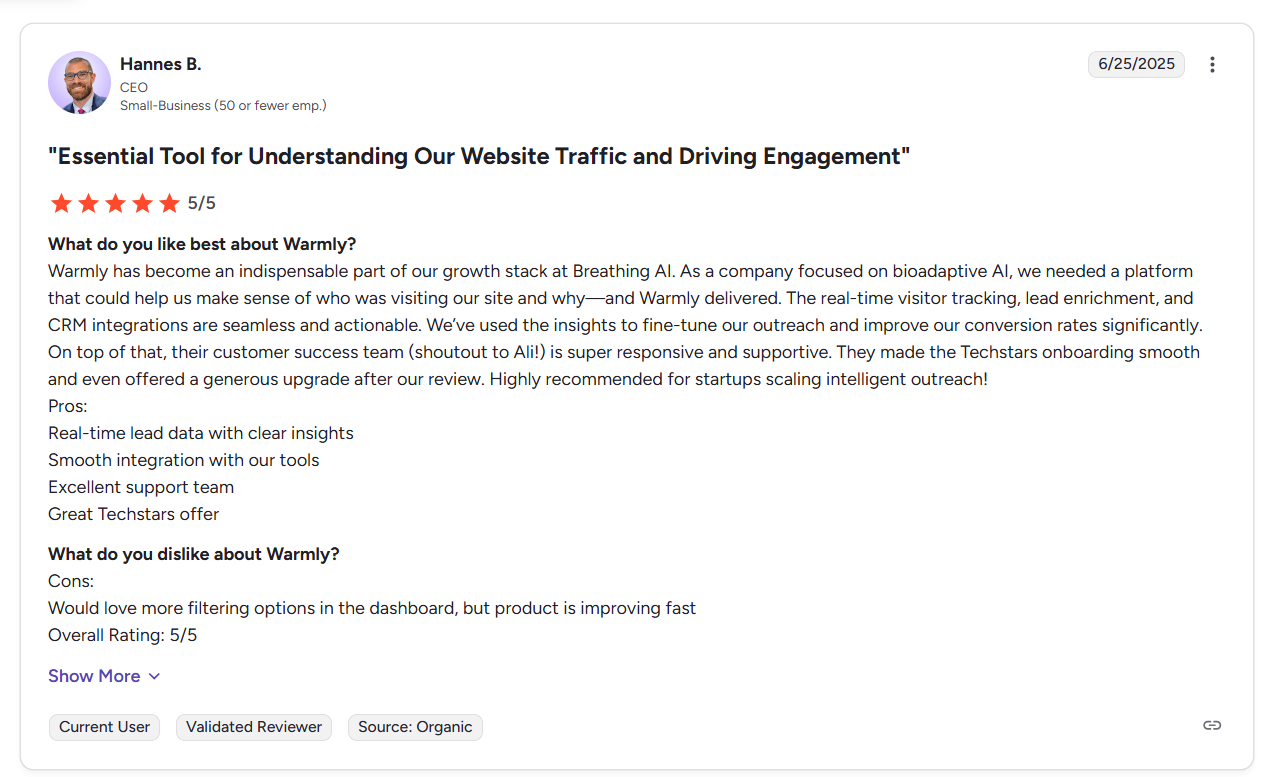
Warmly’s team has been incentivizing users to leave unbiased reviews on software review platforms like G2 and Capterra, as we saw that brand mentions in review platforms are often cited in the sources section.
💡 Our next step is to determine how we can increase our exposure on Reddit, as the platform has an agreement with ChatGPT. I often see Reddit opinions being used as valuable information in the recommendations engine.
Warmly now receives just under a thousand LLM sessions to its website a month, with about half of them being engaged sessions.
However, the biggest result has been how Warmly now generates 33% of its inbound from AI search.
.png)
Our internal trackers show that Warmly is one of the most consistent solutions when it’s being recommended for identifying website visitors in 2025.
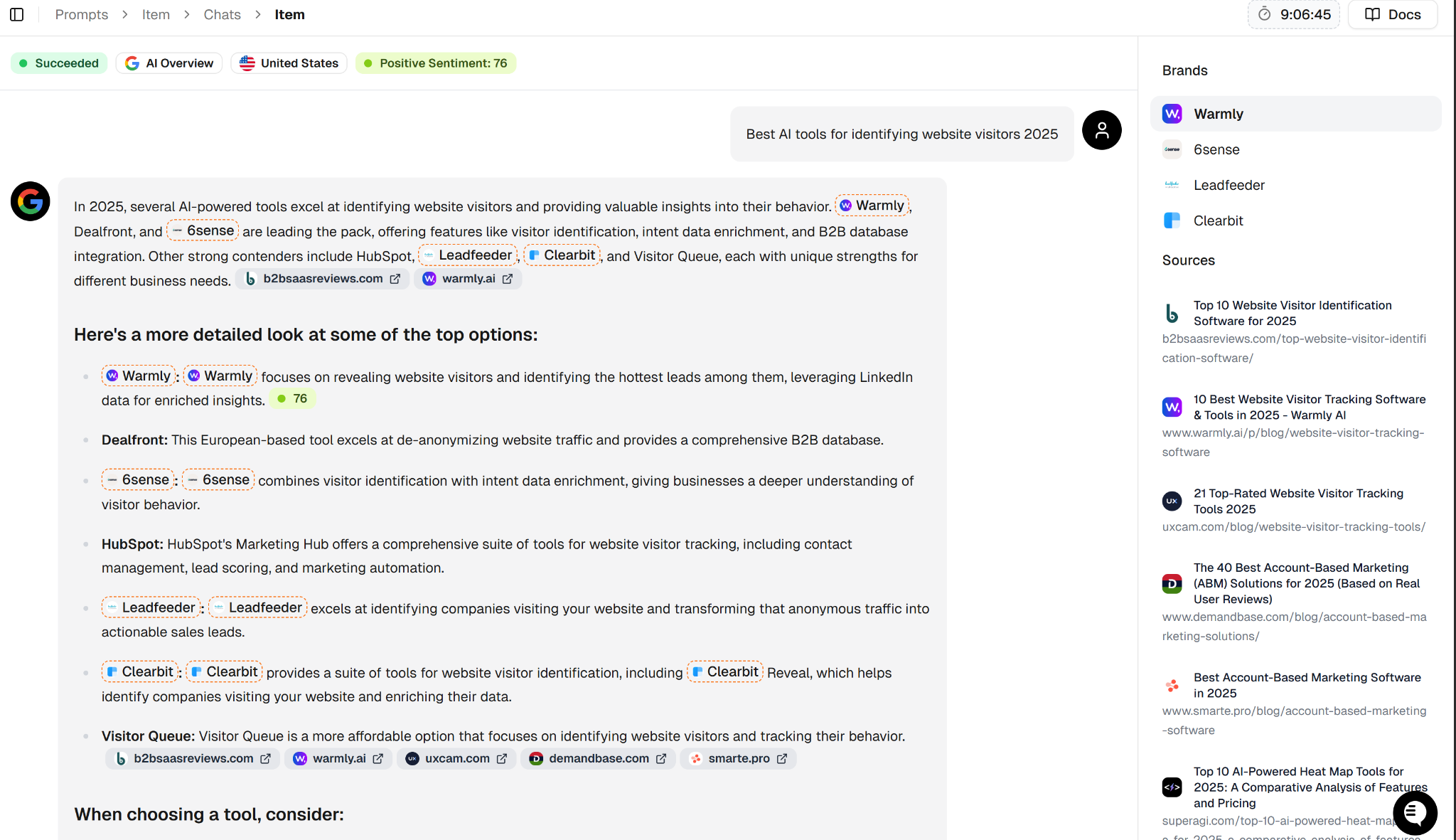
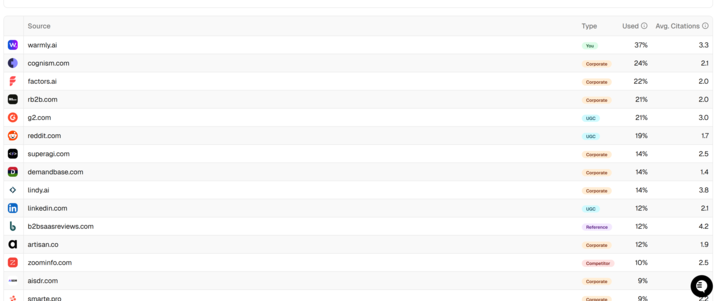
Overall, we’re also being mentioned in the sources section in 37% of the conversations that we’re tracking, with 3.3 average citations.
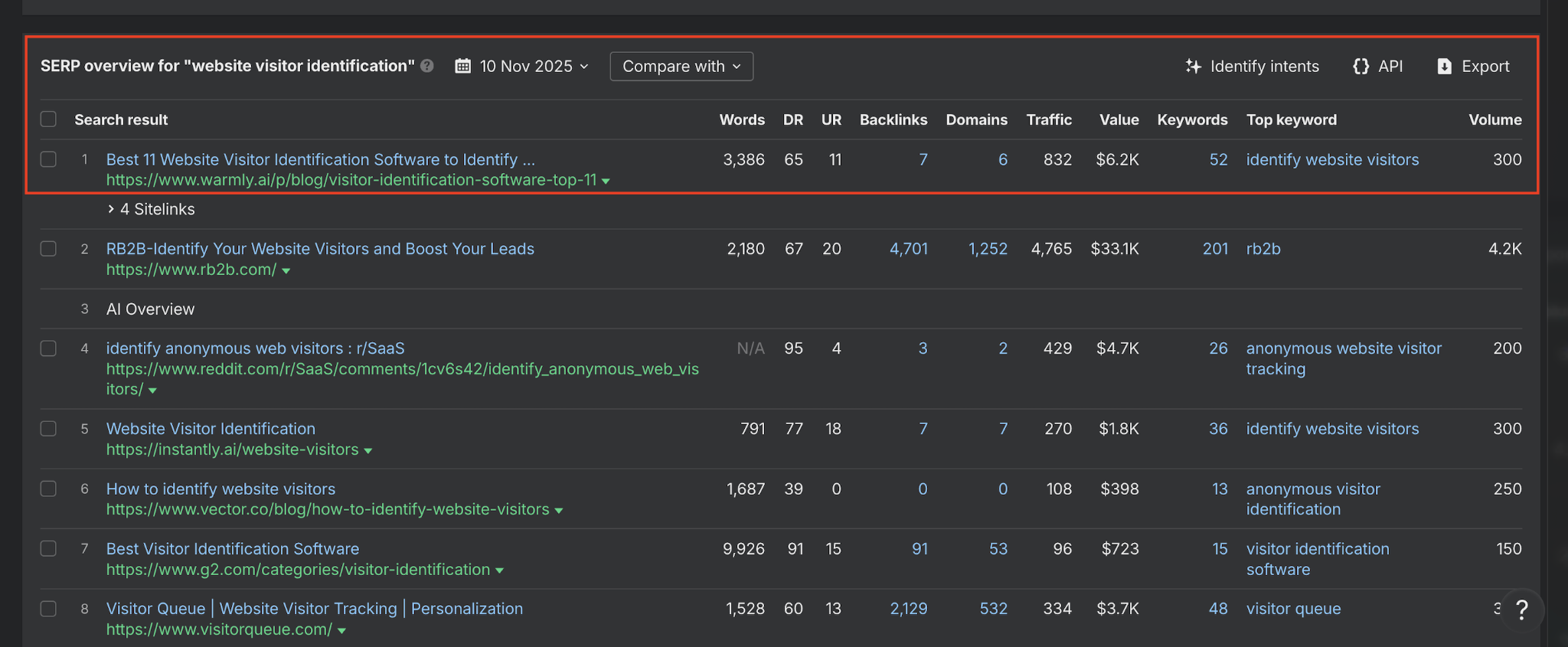
From an SEO perspective, we were able to rank in position 1 without having to build backlinks for lucrative keywords, such as ‘’website visitor identification software’’ which is now one of our main money keywords.